• Skip to primary navigation
  • Skip to main content
  • Skip to footer

Keppie Careers

Social media speaker, social media consultant, job search coach

  • About
    • Expert Job Search and Social Media Consultant / Speaker
  • Services
    • For Job Seekers
    • For Entrepreneurs
    • Social Media Coaching and Consulting
    • Speaking/Keynotes
  • Resources
    • Sample Resumes
    • Quoted In
  • Books
  • Blog
  • Contact

How to Re-think your job search

March 9, 2011 By Miriam Salpeter

If you’ve been looking for a job unsuccessfully for a long time, you are not alone. However, just because you haven’t landed yet doesn’t mean a job isn’t just around the corner. One adage that is true for job seekers? If you’ve been doing the same thing, over and over again without achieving the results you want — it’s time to try some new things!

This month, the Career Collective (a community I co-coordinate with my colleague Jacqui Barrett-Poindexter) looks at how to re-tool, re-focus and generally re-organize your job hunt. It’s almost spring (at least on the calendar), so it’s as good a time as any to review your plans.

1. First thing to evaluate: does your target job exist?

Maybe this sounds obvious, but many jobs are not going to come back. Certain industries may never recover from the downturn, some positions are being replaced with automated systems or being sent overseas, and other jobs are going to contractors and short-term workers instead of permanent employees. (Temp to perm has become a reality for a lot of people.)

Even if you’re doing everything “right,” if you are looking for a job that doesn’t exist, you’re likely going to continue to be very frustrated. Your choice? Either a) hang a shingle (maybe a virtual shingle) and think about going into business for yourself as an independent contractor or b) read on!

2. Have you considered that it may be time to change career paths or directions altogether?

Even if your job “exists,” maybe things have changed and it doesn’t “exist for you.” It’s possible companies no longer want to pay for your experience and prefer to hire less skilled people to do the work. No matter the reason, maybe it’s time to think about a new career path.

Identify growth fields and careers and start researching to learn if you may be a good candidate for opportunities in the new industry. Make sure to target your resume and other materials to your new goal employer. (This is very important, as transitioning between fields is not an easy thing to do, especially when there is a lot of competition for jobs.)

One thing that may help is to have a strong online presence supporting your skills in your new targeted industry. A social resume (website), where you highlight your expertise and skills (maybe via a blog) can help attract interest in your abilities as they apply to a new field. Consider creating your social resume (YourName.com) I can help!

3. Have you been too picky?

Do you have a certain vision of the type of job you’re willing to do? Maybe you don’t even LIKE the work you did in the past, but you have your mind set on doing it again. Have you been too particular about the type of people or places where you want to work? (A 20-minute commute — absolutely not! Work for him – are you kidding? When pigs fly!) I am not suggesting you take just “any” job, but it may be a good time to take a good, long, hard look at what you want and decide if you need to change your goals.

Maybe a longer commute is worth it if you can land a job at X company or in Y field or industry. Decide what parameters you can change and refocus your search with new vigor. You never know how opening up a few new windows may result in an open door.

Take a look at how my colleagues responded to this month’s question below and follow our posts on Twitter via the hashtag #CareerCollective.

Personal Branding to Fire Up Your Job Search, @DebraWheatman

Succeeding in a “Final Jeopardy!” World, @WalterAkana

5 Steps to Retool & Jumpstart Your Job Search, @erinkennedycprw

Your Job Search: Let’s Just Start Again Shall We? @GayleHoward

Checklist for Spring Cleaning Your Job Search, @careersherpa

5 Ways to Spring Clean Your Job Search, @heatherhuhman

Ten Surefire Ways to Organize Your Job Search, @KatCareerGal

Put Spring Into Your Job Search, @EliteResumes @MartinBuckland

Toes in the Water, @ValueIntoWords

How to Revitalize a Stale Job Search, @KCCareerCoach

How to re-think your job search, @Keppie_Careers

Wake Up and Smell the Flowers: Spring Cleaning Your Resume, @barbarasafani

Spring Cleaning and Your Personal Brand, @resumeservice

Spring clean your mind clutter first, @DawnBugni

Managing Your Career 2.0: On Giving Something Up To Get It Right, @Chandlee

photo by Werner Kunz (werkunz1)
Filed Under: Career Advice, Entrepreneurs, Uncategorized Tagged With: career coach, how to find a job, how to find a job after looking a long time, keppie careers, Miriam Salpeter, social media coach, what to change about your job hunt

30 Ideas – The Ideas of Successful Job Search

March 4, 2011 By Miriam Salpeter

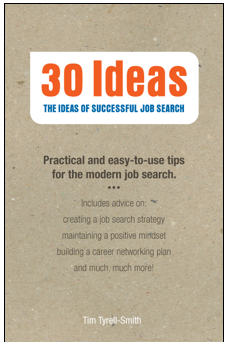
Job seekers don’t have to look very far to find advice. Book stores and the Internet are filled with ideas about strategies, tools and tips to help people find jobs. What is different about my colleague Tim Tyrell-Smith’s book, 30 Ideas: The Ideas of Successful Job Search, is his perspective as a hiring manager and a former job seeker. He was inspired to share his 30 ideas based on his own experiences.

He explains his job search focus is on “working with a purpose throughout the process…there’s little room for impulse decision-making. It is about efficiency and structure.” A bonus? His background is in consumer marketing (22 years). In case you didn’t already know — finding a job is all about marketing, branding and communicating, so Tim’s experience is invaluable.

30 Ideas offers both practical advice and important reminders.

For example, we know it’s difficult to maintain a positive mindset while job hunting. We also know how invaluable it can be to face the challenge with an optimistic attitude. Tim empathetically provides numerous suggestions to help job seekers keep an upbeat focus, including:

  • ideas to create an actionable strategy
  • reminders to embrace some of your “free” time to recharge your batteries
  • specifics to consider, even on the worst days
  • tips to overcome irrational fears
  • how to avoid the “out of work” stigma

In addition to these important reminders, Tim takes his readers through practical job search networking steps, offering advice about:

  • how to tell your network what you want
  • whom to target for networking
  • how to handle networking events
  • when to readjust your “pitch” — and how
  • what NOT to do when you network (which could be as important as what TO do)

Tim’s book is a great resource for job seekers who need a boost and some real-life, honest-to-goodness advice to remind them they can make a difference in their job hunts. Be sure to also visit Tim’s website/blog, where he offers frequent insights for job seekers — extending the advice in the book and interacting with his readers. You may also be interested in Tim’s LinkedIn group, Tim’s Strategy – Ideas For Job Search, Career And Life, where a community of job seekers and advisors share ideas and suggestions.

Learn more about 30 Ideas on Tim’s site and order it HERE via AMAZON or HERE for Kindle.

Tim generously offered to send a copy of his book to one of my readers! Comment below with a tip for job seekers based on your experience or a question!


Filed Under: Career Advice, Career Books, Drive Your Career Bus Tagged With: 30 Ideas, career coach, get a job, how to find a job, keppie careers, Miriam Salpeter, social media coach, Tim Tyrell-Smith

LinkedIn adds new functionality to ‘Company’ search

February 26, 2011 By Miriam Salpeter

LinkedIn’s blog reported yesterday that you can now search “for companies not only by attributes such as location, industry, and size but also by how you are connected. You can filter a set of results to include only those companies where you have a direct connection or broaden your search to include companies in your extended network.”

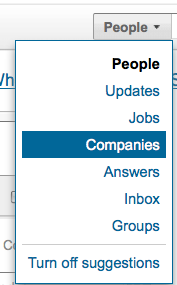
Hopefully, you have already been following companies (read more about following companies on LinkedIn here), but this is a pretty neat improvement. All you need to do is go to the top toolbar, select companies (see picture) and include keywords (which could be city, industry, etc.). LinkedIn finds a list of companies with your criteria where you have connections in your network. LinkedIn links you to those contacts and lets you know which companies currently list jobs in LinkedIn.

You’ll also have a chance to follow the company, which helps you track what is going on there. Take a look at LinkedIn’s video describing the new search function:

http://www.youtube.com/watch?v=1j5VoN_v-Us&feature=player_embedded

I think job seekers (or anyone thinking of making a change) will find this new functionality extremely useful! Be sure to keep up with The LinkedIn blog for updates.


Filed Under: Job Hunting Tools, social media Tagged With: career coach, how to find a job, how to use linkedin to find a job, keppie careers, linkedin, Miriam Salpeter, social media coach

How to find the work you love

February 13, 2011 By Miriam Salpeter

Today, I’m happy to share a bit of “love” from my colleague, Sital Ruparelia. Sital wrote this poem to help careerists everywhere think about what they want to do next…and how to get there. Learn more about Sital via his site: www.SitalRuparelia.com/blog.

Roses are red, violets are blue
Here’s a Valentines poem, I wrote just for you

Maybe you’re searching for “the one” job you’ll truly love
A job so special, it fits like a glove

Maybe you’ve set your sights on becoming a career changer
To start a new business and become an entrepreneur

Or maybe you’re just looking for one last romance
To grab some “me time” and precious work-life balance

Alas, the secrets of career success are no different to finding personal joy
Where the winners get nowhere by being shy and coy

To find that job, promotion or brand new lifestyle
You need to step up a gear and go the extra mile

Step out of your comfort zone and step out onto the wire
Take some risks and the occasional flyer

Stop hiding behind your inexperience and personal history
And build a competitive advantage around your unique story

Stop procrastinating and waiting for your ducks to line up in a row
The time will never be “right” – so go on, just have a go!

Stop putting off the dream until “someday”
When the best time to get started is, in fact, today

The world is waiting for you to do the work you love
And maybe this poem is “the sign” you’ve been waiting for, from “up above”

For today is Valentine’s Day, a time for celebrating great romances
So start scaring yourself by taking a few more chances

Happy Valentines day folks,

Sital Ruparelia

If that doesn’t inspire you to start thinking about creating your own future, I don’t know what will! 🙂

If you’re interested in a social resume (YourName.com) to start you off on the right path, be sure to visit my new site: YouNeedASocialResume.com.

photo by jikido-san

Filed Under: Career Advice, Career/Life Balance Tagged With: career coach, do you love your job, how to find a job, how to find a job you love, keppie careers, Miriam Salpeter, Sital Ruparelia

Be a go-giver — it improves your career prospects and so much more!

February 9, 2011 By Miriam Salpeter

“Every March 28th, I make two phone calls — one to the person who took a chance and hired me in 2003 and one to the person who taught me to drive on the other side of the road when I came to the U.S. from Singapore.”

If you knew Lynn Wong, you wouldn’t be surprised that she remembers those important people in her life! I met Lynn via an introduction from my friend, Jenny DeVaughn. (That’s not very surprising, as I’ve written about how Jenny is a connector.) After spending some time with Lynn, who is on a brief work hiatus before she begins a job as senior manager in global logistics at a Fortune 500 company, I knew she’d have a lot of terrific ideas to share, so I asked if she’d let me interview her about a few key topics that interest both of us:

  • Emotional intelligence as it pertains to the job search and working world
  • Networking — how to do it well and make it effective, even if it doesn’t appeal to you
  • General tips and advice from someone who has interviewed a lot of candidates

I hope I can do our interview justice! Lynn shared a lot of gems…

When we first met, Lynn mentioned one of the reasons she was invited to interview for her new position was because she had spent time at a social event years ago with a senior executive she knew. He remembered their conversation and having worked with her and suggested her name (a few years later) as a possible candidate for her new  position. After a series of interviews and meetings, Lynn earned the job.

Was it pure serendipity that things turned out so well for Lynn’s career? Not entirely. After spending time with her and learning about her goal to always be “as kind to as many people as she can,” — with a focus on being “kind and consistent with integrity,” it’s easy to see one factor in her success is her emotional intelligence. As a manager, she believes emotional intelligence, in particular, empathy, is key to thriving in globalized and matrixed teams that have become the norm in many organizations.

She explained, “What does it mean to be successful? You cannot be everything to everyone, but you can care for people holistically. If you don’t get to know people, you won’t be able to bring out the best in them…It’s important to find common ground (between colleagues) in order to build winning teams, achieve consensus and move forward.”

Lynn points to self-awareness, another aspect of emotional intelligence, as crucial to success in the workplace. How can you become more self-aware? She suggests reading two books, Brag! by Peggy Klaus and Little Book of Big Networking Ideas, by Nadia Bilchik. Brag helps effectively develop “brag bites” to share experiences and Little Book teaches how to make meaningful connections by becoming a “go giver.” Tips from both books help networkers build bridges to other people.

One thing Lynn looks forward to when she begins her new job is being able to meet and ask her colleagues their stories — not only what do they do, or what is their role in the organization, but how they got there, what they enjoy and what keeps them coming back. She’ll file their stories in her mind and revisit them later if an occasion arises for her to connect them with others for personal or professional growth.

I asked Lynn for tips to help people learn to make a strong connection with strangers while networkng. She suggested thinking of touchpoints that connect all of us — but don’t necessarily have anything to do with work. In particular, focus on what you have to give. Her suggestions:

  • Food connects people — where can you get the best wings in town? What’s your favorite recipe? (Not surprisingly, this is a big topic on Twitter and Facebook!)
  • Sports
  • Where to get tickets for events
  • Vacation spots
  • Great websites and online resources

How do you bring these topics up in conversation? Lynn suggests “playing host” at a networking event. If you’re uncertain or lonely, no doubt there are others feeling the same way. Find two people and act like it’s your party — introduce them to each other. Ask what brings them there and ask questions about themselves. (Feel free to bring up your key touchpoints you like to talk about.)

Lynn explained the skills you need to successfully network and to consistently make a connection with new people — self-awareness and being in touch with your strengths and your limitations (and knowing how to acknowledge them) — overlap significantly with successful managerial and interviewing skills.

For example, she suggests candidates must be able to use “I” and “we” statements appropriately in an interview. When she interviews a candidate who uses only “we” statements — “We created…We initiated…We accomplished…,” she wants to know the candidate’s role in the team’s success. However, using only “I” statements does not serve an applicant well, either. Weaving them together, for example, “I partnered” or intermingling them as necessary provides the interviewer a sense you know what you offer and how it relates to working with other people.

The best interview preparation? Lynn appreciates hearing stories — including humor, and even a punchline (as long as it is appropriate, maybe even a little self-deprecating). While no one wants to hear your autobiography, a brief, funny story from your childhood that illustrates a quality you want to show, followed by explaining how you use that skill today, may be well received and help make you more memorable.

Lynn suggests preparing stories to address topics from your resume, but also preparing how to answer typical interview questions, since most interviews do tend to ask for similar insights. (As for the weakness question — know your weakness and explain what you are doing to work on it.) Be ready for anything in an interview, and don’t be intimidated if a panel evaluates you. As Lynn notes, “You need to be able to talk to several people at once in a job setting.” So, it makes sense to incorporate a panel to evaluate you. (Plus, she explains, sometimes a candidate who isn’t right for one hiring manager is perfect for another position.)

Networking does not have to be stressful and intimidating. Lynn does not attend networking events; she built her connections through active volunteerism in her company and community. She explains, “When you meet someone working for a cause, chances are good that you will make a meaningful connection, because you already have the cause in common…When people are stripped of their corporate and work personas, you really learn what makes people tick.”

Lynn believe is “paying it forward” and being a go-giver of ideas and connections whenever she can. Being a valuable resource to other also means becoming the “go-to” person over time in your niche or community. Lynn notes, “This role pays you back many times, because others begin to seek you out to share ideas and connections.” As Lynn says, “Good people beget good people.” Her go-giving philosophy ties into her belief that connecting with others is a way of life, not just restricted to sharing contacts on LinkedIn or swapping business cards. She notes, “You can smell it when someone is networking to get something from you versus making a genuine connection. Why would you share a precious resource with a stranger until you make a real connection?”

Take a lesson from Lynn — think about how you can manage your career by focusing on how you engage with people everyday. Your success may depend on it!

Filed Under: Career Advice Tagged With: Brag!, how to find a job, how to manage your career, how to network in person, keppie careers, Little Book of Big Networking Ideas, Lynn Wong, Miriam Salpeter, Nadia Bilchik, Peggy Klaus

  • « Go to Previous Page
  • Page 1
  • Interim pages omitted …
  • Page 83
  • Page 84
  • Page 85
  • Page 86
  • Page 87
  • Interim pages omitted …
  • Page 174
  • Go to Next Page »

Follow Us!

  • Facebook
  • Instagram
  • LinkedIn
  • Pinterest
  • Twitter

Be an Insider: Sign Up to Receive Special Offers & Free Gift


About Keppie Careers

Are you a job seeker or business owner? You’ve come to the right place!
Click here to find out more.

Contact Us

Have a question or comment?
Click here to Contact Us.
© Copyright 2024 Keppie Careers