• Skip to primary navigation
  • Skip to main content
  • Skip to footer

Keppie Careers

Social media speaker, social media consultant, job search coach

  • About
    • Expert Job Search and Social Media Consultant / Speaker
  • Services
    • For Job Seekers
    • For Entrepreneurs
    • Social Media Coaching and Consulting
    • Speaking/Keynotes
  • Resources
    • Sample Resumes
    • Quoted In
  • Books
  • Blog
  • Contact

5 tips to achieve work-life balance

March 27, 2015 By Miriam Salpeter

Resolution - better time managementWork-life balance is a topic on the minds of many professionals and job seekers. WorkplaceTrends.com, a research and advisory membership service for forward-thinking human resources professionals, and CareerArc, a global recruitment and outplacement firm, recently announced the results of the 2015 Workplace Flexibility Study. They surveyed 1,087 professionals nationally, both employed and unemployed, and 116 HR professionals.

Interestingly, 67 percent of human resources professionals think their employees have a balanced work life, yet 45 percent of employees believe they don’t have enough time each week to handle their personal business. Plus, 20 percent of employees surveyed spend more than 20 hours per week working during their own time.

Yair Riemer, chief marketing officer of CareerArc, suggests the following tips to help employees achieve work-life balance while reducing stress and increasing productivity.

1. Prioritize, prioritize, prioritize. “Prioritization is the key to success and is a lesson that can be applied across a wide variety of industries – not just startups where product and engineering teams often prioritize tasks weekly,” Riemer says. When you identify the most important items on your to-do list, it’s easier to know where to start and when you can finish for the day or week. Prioritization helps you focus on what is really important and decreases unnecessary stress that comes with an urgent focus on less timely or unimportant tasks.

It’s a good idea to touch base with your supervisor if you have multiple projects and need help deciding which one is most important.

2. Be proactive – not reactive. “When you’re reactive, you lose touch with what’s really important,” Riemer says. “And thus, you fail to operate at peak capacity, causing stress.” When you take the time and effort to plan ahead and anticipate what your colleagues or managers may request, you’ll be better prepared to juggle multiple tasks and schedule your time. “With your schedule planned, you can attack those tasks proactively, rather than waiting for external inputs to land on your desk, increasing your stress levels and leaving you overwhelmed,” he says. Hopefully, this will prevent you from bringing a lot of work home on a regular basis.

3. Use your vacation. The average American takes only about half their paid time off per year. “That’s not enough time to recharge,” Riemer says.

Plus, studies show that many workers don’t disconnect from work, even when they’re on vacation. They are still glued to their devices and screens to check work email and keep up with colleagues. Riemer believes taking a vacation and truly disconnecting is key to recharging and getting re-energized once back at the office.

4. Trust in your peers. “The best managers trust their employees, and the best employees have trust in their company’s leadership,” Riemer says. “If you believe in your colleagues – in their intellect, in their work ethic, in their skill set – then share the load.” Even if you believe you have to do everything yourself, it’s unlikely you’re expected to carry the entire burden at the expense of all of your personal time.

If you work with a team, be sure to collaborate on projects, and don’t own tasks for the sake of ownership. “You may be a Type A perfectionist or love control, but winning organizations are made up of teammates, not individuals,” he says. “Your work-life balance will improve significantly with a little bit of help from your friends.”

Get my free white paper: 5 Mistakes Preventing You From Landing a Job This Week 

5. Exercise. Don’t put off taking care of yourself. You don’t need a gym membership or fancy equipment to exercise. Even a brisk walk in the morning or at lunchtime can be invigorating and help clear your mind. “Research shows regular exercise helps keep you clear-headed, which improves control of work-life balance, reduces stress and increases self-efficacy,” Riemer says.

The 2015 Workplace Flexibility Study found that 75 percent of employees ranked workplace flexibility as their top desired benefit. Whether or not your employer is actively seeking ways to enhance your flexibility, use these steps to protect your personal time and to make an effort to tip the balance in your work-life hours.

Appeared on U.S. News & World Report.

Filed Under: Career Advice Tagged With: career expert, how to convince employers to hire you, how to find a job, keppie careers, Miriam Salpeter, personality at work, work-life balance

April Fool’s pranks for work

March 25, 2015 By Miriam Salpeter

file7811297827424Are you already plotting and planning your workplace April Fool’s Day pranks? Or, are you the butt of the jokes – the one always on the receiving end of every prankster with an idea?

If you’re considering pulling a big prank at work, you may want to think twice. A national survey by a recruitment firm found 68% of advertising and marketing executives think April Fools’ pranks are inappropriate for the workplace. While under the guise of “team building,” certain pranks cause more harm than good. Even if your corporate or office culture embraces jokes, be aware that a misstep, even if intended all in fun, can mean you’re looking for a new job if someone takes it the wrong way, or if things go too far.

How can you evaluate a workplace prank?

Don’t be a bully. 

Every office has a few known misfits – people who don’t seem to mesh with the rest of the crowd. Choosing these teammates to be on the receiving end of your prank isn’t funny, it’s mean spirited and potentially cruel. Picking on someone known to be an outsider puts you on the same level of the grade-school bully who takes lunches from weaker kids on the bus.

Resist the urge to do anything that could cause permanent harm.

While changing a meeting time on someone’s calendar to cause them to miss an appointment may seem casual or harmless, if the event was important, the prank may escalate from mirthful to consequential very quickly.

Avoid gags that could be considered offensive. 

Stay away from anything that could be interpreted as targeted at any group or could be considered harassment. Making fun of people based on their race, religion or sexual orientation is never appropriate. Anything sexual in nature at all (a stripper, for example) is crossing the line in the office and could result in harassment charges.

Know your audience. 

If your target is the one who normally plans office pranks, and gags are common in your workplace, you’re less likely to be met with resistance, and your prank may be well received. If you work in a place where fun comes first, a well-played practical joke may be a welcome distraction. On the other hand, if it’s a buttoned-up work environment or clients frequent the office, you may want to think twice (or three times) before breaking the company’s culture with an April Fool’s joke.

Consider social media’s potential to extend – or ruin – your harmless prank. 

Maybe making your boss look a little silly won’t get you fired (if you’re lucky). However, making your boss look silly, filming it and posting it on the company’s YouTube channel or Twitter feed may very well result in termination. Be aware of the ramifications of what you do and how a single photo posted on Facebook can affect someone’s career.

“Safer” work gags.

There’s no dearth of ideas online for practical jokes at work. If you must break the monotony at work and have considered your plans in the context of advice to evaluate a workplace prank, choose something that won’t hurt anyone’s feelings and that leaves everyone involved thinking, “That was funny.”

Here are a few April Fool’s Day pranks unlikely to hurt anyone, but proceed at your own risk. 

  • Mashable suggested arranging for co-workers to each bring in several changes of clothing, and to update their outfits throughout the day. While it could make a very tired co-worker think he is going crazy, it’s unlikely to cause any real harm.
  • Put “Out of Order” signs on bathroom doors or on other “important” devices, such as the coffee pot or microwave.
  • “Foil” or “wrap” someone’s office. Before you start, be sure he or she doesn’t have an important meeting first thing in the morning, and then cover everything in the office.
  • The old “fill the drawers” trick. Ping pong balls in every drawer will be inconvenient, but is unlikely to cause any real damage.
  • Balloon an office. It can be a challenge to fill an office with balloons, and clean up may be a pain, but it can be a fun –- and colorful –- prank to spice up the day.

Get my free white paper: 5 Mistakes Preventing You From Landing a Job This Week 

If you do choose to proceed with a prank, make sure to be careful and keep the end goal in mind. You want everyone remembering the prank as being fun and clever, not nasty and mean spirited.

Originally appeared on AOLJobs.com.

Filed Under: Workplace Tagged With: April Fool's at work, career expert, how to convince employers to hire you, how to find a job, keppie careers, Miriam Salpeter, personality at work, pranks for work

Never say these things in interviews

March 24, 2015 By Miriam Salpeter

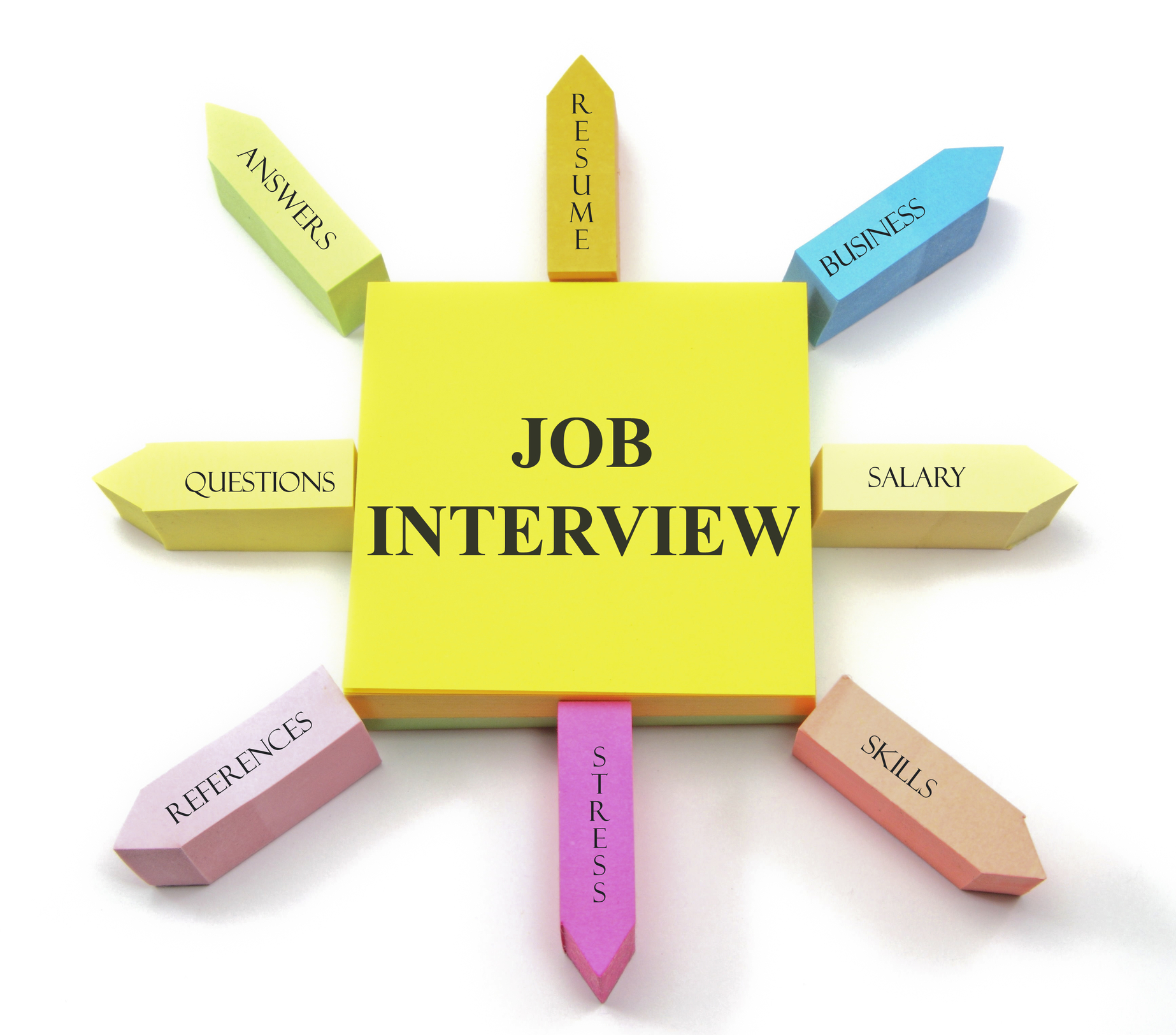
http://www.dreamstime.com/royalty-free-stock-photo-job-interview-sticky-notes-image28983875Interviews are probably the most challenging part of the job search process. You need to be ready for anything, including weird interview questions. You don’t want to blurt out something inappropriate and send all of your hard work down the toilet. Avoid these inappropriate comments during your interview:

1. I’m really nervous. There’s nothing wrong with feeling nervous. It’s natural to be a little uneasy at an important interview. Don’t tell the interviewer if you have butterflies in your stomach, though. Your job in the interview is to portray a confident and professional demeanor. You won’t win any points by admitting your nerves or blaming them for any failures in your performance.

2. I don’t really know much about the job; I thought you’d tell me all about it. This is a big job seeker mistake, and it can cost you the opportunity. Employers spend a lot of time interviewing, and they expect candidates to have researched the jobs enough to be able to explain why they want the positions. Otherwise, you could be wasting everyone’s time by interviewing for a job you may not even really want. Asking questions is important, but don’t ask anything you should know from the job description or from reading about the company online.

3. My last boss/colleague/client was a real jerk. It’s possible (even likely) that your interviewer could prod you into telling tales about your previous or current supervisor or work environment. Resist the urge to badmouth anyone, even if you have a bad boss. It is unprofessional and the employer will worry what you may say to someone about him or her down the road. Instead, think about ways to describe past work environments in terms of what you learned or accomplishments you’re proud to discuss.

4. My biggest weakness is (something directly related to the job). “What’s your weakness?” is one of the most dreaded interview questions. There’s no perfect reply, but there is a reply you should never say: Never admit to a weakness that will affect your ability to get the job done. If the job description requires a lot of creativity, and you say your creativity has waned lately, assume that you’ve taken yourself out of the running. Choose a weakness not related to the position and explain how you’re working to improve it.

5. @#$%! Granted, profanity seems to be much more accepted in many workplaces today. However, an interview is not the time to demonstrate that you can talk like a pirate.

6. Just a minute; I really need to get this call. It’s amazing how many hiring managers and recruiters report that interviewees answer their phones and respond to text messages during in-person interviews. Turn off your phone during interviews and you will not be tempted to reach to answer it.

7. How much vacation time would I get? Never, ever ask questions in an interview that may make it appear that you’ll be overly focused on anything other than work.

8. Can I work from home? Even if you’re pretty sure the company has a lenient work-from-home policy, the interview isn’t the best time to ask about it.

Get my free white paper: 5 Mistakes Preventing You From Landing a Job This Week 

9. Family is the most important thing to me. This is true for many people. However, you do not need to explain how devoted you are to your family during your job interview. It is unlikely to win favor, even in organizations with a well-known family-friendly environment. You want your potential employer to envision you being totally devoted to his or her needs.

When in doubt, pause before you say what’s on your mind. If you wonder if it’s okay to ask, assume it’s better to avoid the topic altogether.

Appeared on AOLjobs.com.

Filed Under: Interviewing Tagged With: career expert, how to convince employers to hire you, how to find a job, keppie careers, Miriam Salpeter, personality at work

How to prove to employers you’re a catch

March 16, 2015 By Miriam Salpeter

http://www.dreamstime.com/stock-image-skills-word-sphere-ball-required-experience-job-career-to-illustrate-many-different-skillsets-knowledge-training-image35557201In a survey of millennials and hiring managers commissioned by Elance-oDesk and Millennial Branding, Jaleh Bisharat, Elance-oDesk senior vice president of marketing, and Dan Schawbel, Millennial Branding managing partner, showcase how professionals can thrive as millennials tip the scales as the largest workforce generation next year.

Bisharat and Schawbel offered the following analysis and suggestions for succeeding in the workforce:

1. Focus on hard skills. “A majority of hiring managers (55 percent) revealed they prioritize hard skills over personality (21%) when hiring,” Bisharat notes. “With the rapidly changing tech landscape and a persisting skills gap, it is more important than ever for businesses to find people with the specific skills they need to deliver results.”

Employers will appreciate your efforts. “Whether you’re a millennial or a more seasoned professional, there’s no excuse not to keep up to date on skills relevant in your field,” Schawbel adds. “With free and low-cost online learning platforms like Coursera and Lynda boasting courses ranging from Photoshop for beginners to the ins and outs of Bitcoin, a world’s worth of hard skills are at your fingertips.”

2. Be the change you want to see. Millennials are known for innovation. The survey notes that hiring managers believe millennials are open to change (72 percent), creative (66 percent) and adaptable (65 percent) – far outranking their Gen X counterparts for these desirable traits.

“Many companies still run up against the digital divide and shrink from pushing past the old way of doing things. That’s why, if you’re a millennial, you should play up your unique ‘digital native’ talents (real and perceived) to spur innovation on your teams,” Schawbel says. “Companies are hungry for new ideas, and while millennials are champions of change, all professionals should strive for adaptability.”

3. Prove you’re a team player. While they appreciate seeing specific “hard” skills on résumés, more and more employers are considering the work culture they wish to develop and seeking team players to create it. “Although millennials are seen as providing critical advantages thanks to their fresh thinking and entrepreneurialism, findings of our study showed that, when asked which generation was more likely to be team players, only 27 percent of hiring managers chose millennials rather than Gen X,” Bisharat explains. “This perception, whether reality or not, is a demerit that can slow career growth. If you’re a member of this youngest generation of professionals, make sure to develop teamwork skills to prove this impression wrong. If you’re a more established professional, be open to working closely with and mentoring millennials.”

4. Stand out as a “loyalist.” No doubt, employer loyalty is waning with good reason. All employees are realizing that they cannot count on a corporate entity to return the favor. Despite this, it’s helpful to be able to tap into your passion and interest for an organization. “Simply showing you are dedicated can help you build trust with your team and organization,” Schawbel says. “With 58 percent of millennials reporting they expect to be in their job fewer than three years, displays of loyalty will certainly nudge employers to invest in your professional future.”

Get my free white paper: 5 Mistakes Preventing You From Landing a Job This Week 

5. Consider alternative paths. While it’s great to be able to articulate and demonstrate your interest in a particular company, facts are facts. The majority of employees will not be able to expect to stay in one job for many years, and being agile and flexible enough to shift – even to an entrepreneurial path – will be key to success for many workers.

“Even if you venture out on your own, you will never be successful without involving others.” Bisharat explains. “Sara Horowitz, founder of Freelancers Union, believes freelancing is all about networking. She says, ‘Freelancing successfully means building a network to line up new gigs, passing assignments to others when things are busy and getting referrals from friends when they’re not.’ You never know when these connections will turn into opportunities down the road.”

Originally appeared on U.S. News & World Report.

Filed Under: Career Advice Tagged With: career expert, how to convince employers to hire you, how to find a job, keppie careers, Miriam Salpeter

Three ways to find your perfect career

March 11, 2015 By Miriam Salpeter

loveAre you in the right job for you? If not, you aren’t alone. According to Gallup’s State of the American Workplace report, 70 percent of American workers are either “not engaged” or “actively disengaged” in their work. One survey states that 68 percent of working Americans would be willing to take a salary cut to work in a job that better applied their personal interests.

How can you find a role that is a good fit for you and your personality? With the advice to “do what you love” and “follow your passion” abounding online, many strive to match their vocations with their personal interests in an effort to be happier at work. Conventional wisdom suggests that people who are good at and enjoy what they do – while they may be in the minority – are happier and more successful in their jobs.

How can you be one of those people? Philip Hardin is the CEO of YouScience, a scientific, online profile that measures aptitudes and interests and helps students set a direction for their educations and careers. He believes the key to taking control of your career path is finding a career at the intersection of what you’re good at (aptitudes), what you love to do (interests) and what the market needs you to do (opportunity). These are his tips to help identify your path:

1. Understand your aptitudes. Hardin defines aptitudes as the foundation for skill development. He asks: “Have you noticed how easy it is for you to acquire skills in certain areas, while in others – no matter how hard you try – you end up average?” Understanding your natural aptitudes allows you to play to your strengths and focus on those areas that will give you a true competitive advantage. “Everyone could use a competitive advantage in this tight job market, but every career requires a different blend of natural aptitudes.

It’s easy to assess your basic skills. For example, are you a strong communicator, or are you good at math? Read job descriptions carefully and map your skills to what the employers want. Some skills are a little less obvious. Do you think in 3D? (What are your spatial relations skills?) How quickly can you diagnose and critique a problem? (Do you have inductive reasoning capabilities?) Knowing your unique portfolio of aptitudes provides you with a foundation to help target your education, skill development and career.

2. Identify your interests. Wouldn’t it be ideal if you could do what you love at work? Challenges to this proposition, which include not being very good at what you love and there being few prospects in the field you love, can make it tough to accomplish this goal. Hardin notes: “Doing what you love is one important piece of the career puzzle, but your interests are relative to your experience. Your interests evolve over time as you gain life experiences. They are important when considering a career, because they influence your choices and should direct how you apply your natural aptitudes.”

3. Find the opportunities. The marketplace is constantly changing on an international, national and local level. Whether you are 18 or 50, before you focus on a particular career, it’s a good idea to assess the landscape and opportunities. “Is the tide coming in or out for a particular industry or occupation? You have a set of natural aptitudes and interests; it is your job to find out how best to apply them,” Hardin says. “The job market is a moving target. If you are stagnant, it will hurt you.”

Get my free white paper: 5 Mistakes Preventing You From Landing a Job This Week 

Don’t worry, you don’t need to get out your crystal ball or hone clairvoyant abilities to succeed. However, you do need to recognize when the world is changing. When you plan to invest in a career, take a long-term view. What does the job growth look like for a career 10 years from now, and what skills are required to compete? Keep your eyes open to trends, and read news in your industry. Ask people in fields that interest you what they believe to be the trends that will affect the industry and work.

Hardin suggests: “When doing your research, be sure to think globally, and try to understand how changing demographics and technology might affect your industry.” Position yourself to take advantage of opportunities as a result of new technology.

Awareness is a big step in the right career direction. Focus on your skills and how they fit the market that interests you, and you’ll be on a quicker path to job search success.

Originally appeared on U.S. News & World Report

Filed Under: Career Advice Tagged With: Career Advice, career coach, career expert, how to find your perfect career, job search advice, keppie careers, Miriam Salpeter

  • « Go to Previous Page
  • Page 1
  • Interim pages omitted …
  • Page 7
  • Page 8
  • Page 9
  • Page 10
  • Page 11
  • Interim pages omitted …
  • Page 185
  • Go to Next Page »

Follow Us!

  • Facebook
  • Instagram
  • LinkedIn
  • Pinterest
  • Twitter

Be an Insider: Sign Up to Receive Special Offers & Free Gift


About Keppie Careers

Are you a job seeker or business owner? You’ve come to the right place!
Click here to find out more.

Contact Us

Have a question or comment?
Click here to Contact Us.
© Copyright 2024 Keppie Careers