
• Skip to primary navigation
  • Skip to main content
  • Skip to footer

Keppie Careers

Social media speaker, social media consultant, job search coach

  • About
    • Expert Job Search and Social Media Consultant / Speaker
  • Services
    • For Job Seekers
    • For Entrepreneurs
    • Social Media Coaching and Consulting
    • Speaking/Keynotes
  • Resources
    • Sample Resumes
    • Quoted In
  • Books
  • Blog
  • Contact

What do hiring managers want to know?

February 4, 2016 By Miriam Salpeter

Career AdviceFor job seekers, one of the most important items to identify is what hiring managers want to know. Many candidates wax eloquent about themselves, their backgrounds and experiences, but fail to identify the touch points that help indicate their qualifications for the job.

This is a big mistake. Before you apply for any position, keep the following items in mind so you’ll be sure to provide employers with the information they need to decide if you’re a good fit.

Are You Qualified for the Job?

The easiest way to answer this question is to study the job description and to directly address the employer’s needs. Do not create a resume and other marketing documents without first identifying the most important connections between you and the job. Don’t assume hiring managers will give you credit for skills you don’t list. Include details and specifics about accomplishments and results. Don’t just say you have leadership skills. Include something that resulted from your leadership. For example: “Used leadership and management skills to reorganize team, resulting in 15% increase in productivity.”

Do You Demonstrate Good Judgment?

No matter what job you land, you will represent the organization where you work. Employers want to select candidates who are least likely to do anything embarrassing. When one ill-conceived tweet or Facebook post can make the national news, it’s not surprising that employers want to know that you have good common sense. One way to illustrate you’re a good fit is to maintain professional streams of information in your social media profiles. If an employer can review your Twitter feed without any concerns, you’re a step ahead of competition.

Get my free white paper: 5 Mistakes Preventing You From Landing a Job This Week 

How Well Do You Get Along with Others?

Whether you’ll be working with a team, or connecting with clients and customers, most jobs require working with people. Hiring managers want to know you have strong communication skills and aren’t prone to too much drama. Don’t cause an employer to think otherwise during the application stage by sharing unnecessary personal information or by volunteering details about past bosses or colleagues you didn’t like.

Are You Interested in the Job?

If you’re applying for your dream job, make sure the employer understands why you are well qualified and grasps your passion for the position. While it’s great to hire someone who is a good fit, it’s even better (from the employer’s perspective) to find someone with the skills and a strong interest in the organization and its work. This is especially true for non-profit organizations, where you may have a personal interest in the mission. However, you can also demonstrate a passion about a for-profit company. For example, if you’ve always loved shopping in a particular store because of the customer service you receive there, and there’s a job opportunity that is a good fit for your skills, don’t hesitate to include a few details about your connection to the company when you apply.

Filed Under: Career Advice, Job Hunting Tools Tagged With: how to find a job, keppie careers, Miriam Salpeter, what does the hiring manager want to know

How to build trust at work

January 25, 2016 By Miriam Salpeter

TrustIf you don’t trust someone, it’s pretty difficult to work together. Imagine how challenging it would be to garner strong recommendations, let alone work promotions, if your colleagues don’t trust you.

Even if you have many skills and are extremely competent, if you’re not trustworthy, your potential for success at work is bleak, at best.

How can you win trust at work and be an ally people want to have on their teams?

  • Do what you say you will, at all costs.
  • Take responsibility for yourself, your work and your mistakes.
  • Have your colleagues’ backs. Make decisions with everyone’s interests in mind, with the goal of benefitting the team.
  • Be consistent. If you sometimes deliver on time, but sometimes flake out, assume you won’t get any credit for the times you follow through.
  • Don’t gossip. Everyone assumes a gossip will eventually be sharing salacious information about him or her next time.
  • Always do the right thing. Make choices that are the best for the team, even if they don’t serve your personal best interests.

Learn more, including research to support these suggestions, on the blog I wrote for Elevated Careers.

Get my free white paper: 5 Mistakes Preventing You From Landing a Job This Week 

Filed Under: Career Advice Tagged With: Elevated Careers, how to win trust at work, Miriam Salpeter

Networking tips you need to know

January 20, 2016 By Miriam Salpeter

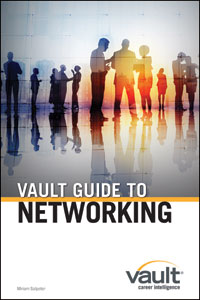
Vault GuideDo you think of networking as a dirty word? Is it something you want to avoid at all costs? You are not alone. However, if you’re a hesitant networker, there’s good news for you! With a little preparation, the right expectations and a strategic plan, networking is probably a lot easier than you think.

If you’d like a guide to help you through every step of your networking journey, I authored one for Vault.com, and it’s available now. Vault is known for its influential rankings, ratings and reviews of thousands of employers and hundreds of internship programs. Vault.com also shares information about what it’s really like to work in an industry, company or profession—and how to position yourself to launch and build the career you want. You can find the Vault Guide to Networking available online.

In the meantime, click through to learn:

  • Compelling statistics to prove networking deserves your attention.
  • What is networking — and what it is not.
  • Networking myths.
  • How to network for success (including some tips to help you become a networking sleuth).
  • How to look beyond the obvious.
  • Understand what you offer.
  • Why networking isn’t about asking for a job.
  • How to time your networking to your best advantage.
  • Why it’s important to be a good listener.
  • Why it’s important to be persistent.

Get my free white paper: 5 Mistakes Preventing You From Landing a Job This Week 

Read the entire article on Vault.com.

Filed Under: Career Advice, Networking Tagged With: how to get a job, how to network to get a job, Miriam Salpeter, networking for job search, Vault.com

Why you should have a personal website

November 29, 2015 By Miriam Salpeter

http://www.dreamstime.com/royalty-free-stock-photo-people-social-networking-computer-network-concepts-image41603635How can you stand out in a competitive market? Whether you want to look for a job or you’re planning to start your own business, making a good first impression is key. People will turn to Google and online tools to help them form first impressions of you. When you apply for positions or vie for opportunities, it’s likely someone will check you out online before considering to invite you to an interview.

That can be good or bad news, depending on what that person finds! The good news is you can influence what people find when they search for you online. One way is to create a stream of professional content via social media tools, such as LinkedIn, Twitter, Facebook and Google Plus. Using these tools is free, does not require a lot of technical skill and, once you understand social media basics, makes it easy to showcase your information.

Get my free white paper: 5 Mistakes Preventing You From Landing a Job This Week 

One additional strategy many job seekers overlook is building and maintaining a personal website, also known as a “social résumé.” Domain.ME – provider of the “.me” domain extension –  conducted a survey of 600 professionals who own their own websites. Eighty-four percent of respondents reported receiving tangible career benefits from their personal website.

A  Forbes article, when referencing Workfolio, noted that “56 percent of all hiring managers are more impressed by a candidate’s personal website than any other personal branding tool – however, only 7 percent of job seekers actually have a personal website.”

How can having your own website help your career? Predrag Lesic, CEO of Domain.ME, offers these insights:

1. It helps you clarify your brand. Can you think of a brand you respect that does not have a website? Would you hire a service provider who didn’t have a strong online presence?

“Today, a web presence is a measure of credibility and a powerful tool for communicating what you are all about to your target audiences,” Lesic says. “While it may seem unusual to consider yourself a commodity, as a job seeker, you are marketing yourself to meet a need. Like every good brand, your personal brand should live online.”

2. It gets you noticed. In the Domain.Me survey, 70 percent reported believing that employers review their online presence prior to an interview. In fact, a 2014 Jobvite survey of human resources professionals reveals that 93 percent of recruiters will review a candidate’s social media profile before making a decision, and that candidate information found on the Web influences their hiring decisions.

“As employers increasingly turn to the Internet to identify and research potential candidates, you want to be searchable. Your Facebook page may entertain family members and friends, but it isn’t designed to highlight your strengths as a job candidate. Conversely, your LinkedIn profile, while providing professional credentials, can be dry and impersonal,” Lesic says. “Not only is your website a fully customizable platform to showcase your personal brand, the savvy you demonstrate in owning your Web real estate and building a site can impress potential employers.”

Creating this online real estate is not difficult, and there are various ways to accomplish it. One way is via “hosted” sites, such as About.me or Flavors.me, which allow you to design your own landing page on their directories. These options result in an online presence, but the URL will not be in your name only.

If you want to own a memorable, personalized domain, you can purchase an address using any of the major domain registrars. Lesic explains: “With .com availability dwindling, a popular choice for personal websites is the .ME extension.”

Once you own a domain of your choice – ideally, “YourName.com” or YourName.me – you can turn to various tools to populate and publish the site, such as WordPress, Wix, Squarespace or Jigsy.

3. It’s more than a résumé. In Domain.ME’s survey, respondents were asked which is more important for long-term career success: a personal website or a résumé. The majority (63 percent) favored websites. “A website is interactive, evolving and dynamic,” Lesic says. “Your portfolio, writing samples, testimonials, images and more add color to your professional history. And your site’s design aesthetic and tone of voice help to convey your personal brand.”

4. It networks for you. While in-person networking isn’t going out of style, digital networking can help make the job a lot easier. More than half of survey respondents believe their personal sites help them achieve professional recognition, connect them with a network of like-minded professionals and attract new customers.

“Your website never sleeps or takes a day off,” Lesic says. “It makes you accessible to an enormous audience and invites people to engage with your content and to contact you.”

Originally appeared on U.S. News & World Report.

Filed Under: Career Advice, social media, Social Networking Tagged With: get a social resume, how to get a job, keppie careers, Miriam Salpeter, why have a website

Yes, you can find a job during the holidays

November 22, 2015 By Miriam Salpeter

89748333_0a07698b96_m“No one gets a job around the holidays. It’s a good time to take a break and relax until things ramp up in the new year.” Are you hearing this advice, or convincing yourself it’s true? If so, you could be missing out on an amazing career or job opportunity.

In fact, the holiday season can be the best time to look for a job. It is a big mistake to take a break now. Finish the year strong! Here are eight reasons to ramp up your job search at this time of year.

1. Organizations may suddenly realize they have money to spend before year-end.
Wouldn’t it be nice to suddenly discover money you didn’t know you had? That happens more often than you think at large companies. They realize at the 11th hour that they have enough in the budget to fill extra positions, but they need to get the people in seats before the end of the year, or the money will disappear. If you stop looking for a job or get lackadaisical about checking emails, you may lose an opportunity and never even know it.

2. Your competition may be taking a break. The myth that November and December aren’t good times to find jobs is strongly engrained in our psyches. (Plus, everyone wants to take a break and focus on things that aren’t related to the job search!) Not everyone is keeping up with the latest and greatest when it comes to job search like you are! As a result, the competition is a little less fierce. When people are on vacation, they may not answer a recruiter or hiring manager’s call in a timely way, which could mean you have an opportunity to impress your next boss on the phone before your otherwise more qualified colleague stops to check email.

3. You want to be prepared and get ahead. Anyone in the careers industry, including resume writers and job search strategists, will tell you January is typically a very busy time, because that’s when many people try to fulfill their New Year’s resolutions that involve getting out of jobs they hate. Don’t sit back and wait to re-enter the pool with everyone else! Get ahead of the crowd. At the very least, use this time to prepare materials to help you land a job, even if the calls don’t come until January.

4. People leave jobs after they receive bonuses.
Some companies give big bonuses at this time of year, and employees who were waiting for those big checks to clear before giving notice will begin to announce their intention to leave–or, in some cases, just walk out the door. When you make yourself available, you will keep yourself open to potential opportunities that would otherwise pass you by.

5. When people take vacations, you may be able to swoop in. Have you ever been in the situation where a lot of co-workers were off for the holidays and a big project came walking in the door? It’s not unusual for companies to find themselves in need of some contract help at this time of year to get their work done. When the regulars are off vacationing and decking the halls, you have an opportunity to audition for a role in the company and to enhance your resume and credentials, even if you know the regular employee is coming back. If you are impressive enough, the organization may find a place for you.

Get my free white paper: 5 Mistakes Preventing You From Landing a Job This Week 

6. Recruiters and hiring managers appreciate quick responses.
No doubt, it can be more challenging to connect with the best candidates at this time of year. When recruiters are in a hurry or hiring managers have an urgent need, the fact that you get right back to them during a holiday period will make you stand out and give a good impression. There aren’t a lot of other times during the year when just being prompt makes such a difference. When you communicate well and quickly, you have an advantage.

7. Improved networking opportunities.
The best people to network with you are the people closest to you and their friends. If nothing else, be sure to get out of the house and accept all of those holiday party invitations. Plan ahead to make the most of these social events by finding out who will be there. Avoid awkward networking moments: check potential contacts out on LinkedIn, Facebook, Google+ and Twitter and rehearse what you may want to say if you see them. Bring your business or “contact” cards with you and be sure to ask for a follow-up meeting with anyone who could be a great contact for you. Don’t forget to use social media to impress friends, new contacts and recruiters. (Read how to use social media to your advantage in a job search.)

8. This is a great time to authentically reach out to your neglected network.
When is the last time you mailed a note to a friend or contact? Have you switched from mailed cards to quickly typed up email greetings or Facebook notes? While it’s best to touch base with your network throughout the year, now is arguably the time when you can feel comfortable writing a note to someone who hasn’t heard one word from you all year long. Don’t use a holiday greeting card to ask for job contacts, but do use them as opportunities to re-open doors that you haven’t knocked on. For example, “It’s been so long since we connected…I’d love to touch base in person to talk about XYZ.”

If you mail out your cards early enough, you may benefit from looser schedules around the holiday season and land a meeting you wouldn’t otherwise get. If you can finesse a reason for one of your contacts to meet with you, when opportunities come up early in the year, you will be top-of-mind.

 Appeared on AOLjobs.com.

Filed Under: Career Advice Tagged With: can you find a job during the holidays, career expert, keppie careers, Miriam Salpeter

  • « Go to Previous Page
  • Page 1
  • Page 2
  • Page 3
  • Page 4
  • Page 5
  • Page 6
  • Interim pages omitted …
  • Page 129
  • Go to Next Page »

Follow Us!

  • Facebook
  • Instagram
  • LinkedIn
  • Pinterest
  • Twitter

Be an Insider: Sign Up to Receive Special Offers & Free Gift


About Keppie Careers

Are you a job seeker or business owner? You’ve come to the right place!
Click here to find out more.

Contact Us

Have a question or comment?
Click here to Contact Us.
© Copyright 2024 Keppie Careers