• Skip to primary navigation
  • Skip to main content
  • Skip to footer

Keppie Careers

Social media speaker, social media consultant, job search coach

  • About
    • Expert Job Search and Social Media Consultant / Speaker
  • Services
    • For Job Seekers
    • For Entrepreneurs
    • Social Media Coaching and Consulting
    • Speaking/Keynotes
  • Resources
    • Sample Resumes
    • Quoted In
  • Books
  • Blog
  • Contact

Simply Hired reports opportunities up for job seekers

March 11, 2011 By Miriam Salpeter

In Simply Hired’s February Jobs Report, there were some silver linings for job seekers.

They reported growth in 17 of 18 industries; only Technology was down a bit (-2.0%). Reported large growth areas: Military (22.7%), Travel (20.9%) and Agriculture (20.0%)

Month-over-month, growth in job openings (based on posted jobs on Simply Hired) were up 3.8% and year-over-year (compared to February 2010), they were up 49.7%.

There are (statistically) 4 people for every 1 job opening nationwide. Top hiring companies nationwide included:

  • Home Depot
  • HCA
  • Securus
  • Starbucks
  • U.S. Air Force

Top hiring sectors based on jobs listed on Simply Hired included: agriculture, automotive, construction, education, financial services, government, health care, hospitality and legal.

Statistically, the most competitive place to land a job was Miami and Fort Lauderdale, where there are 9 candidates for every one opening. Washington D.C. has one job for every one candidate. (Remember, this is a statistical analysis, which doesn’t necessarily mean you will or will not be able to land an opportunity.)

Daniel Greenberg, CMO, SimplyHired.com, explains how they calculate these ratios and what they mean for job seekers:

SimplyHired.com’s unemployment ratio is calculated by taking the average of the total number of currently unemployed persons in the U.S. (as reported by the Bureau of Labor Statistics) over the total number of job openings listed on SimplyHired.com each month. In February, the unemployment ratio was 4:1 nationally. This means that on average there were four job seekers for every one job opening. What this means for job seekers varies by location, if you’re looking for a job in an area like Miami, the unemployment ratio is actually 9:1, and in Washington, DC the unemployment ratio is an ideal 1:1.

This ratio also includes every job opening, meaning that part-time and contract work is considered – not just full-time jobs. Everything else being equal, job seekers in highly competitive job markets would be well served to relocate to areas that have more favorable job seeker-to-unemployment ratios.”

—

If you’re looking for a job — or thinking you need to start using social media to propel your career, my book: Social Networking for Career Success is available on Amazon (at a great discount). Please order now!


photo by Redvers

Filed Under: Communicating, Cover Letters, Job Hunting Tools, Job Stories Tagged With: career coach, Daniel Greenberg, how to find a job, jobs data, keppie careers, Miriam Salpeter, Simply Hired, social media

How to Re-think your job search

March 9, 2011 By Miriam Salpeter

If you’ve been looking for a job unsuccessfully for a long time, you are not alone. However, just because you haven’t landed yet doesn’t mean a job isn’t just around the corner. One adage that is true for job seekers? If you’ve been doing the same thing, over and over again without achieving the results you want — it’s time to try some new things!

This month, the Career Collective (a community I co-coordinate with my colleague Jacqui Barrett-Poindexter) looks at how to re-tool, re-focus and generally re-organize your job hunt. It’s almost spring (at least on the calendar), so it’s as good a time as any to review your plans.

1. First thing to evaluate: does your target job exist?

Maybe this sounds obvious, but many jobs are not going to come back. Certain industries may never recover from the downturn, some positions are being replaced with automated systems or being sent overseas, and other jobs are going to contractors and short-term workers instead of permanent employees. (Temp to perm has become a reality for a lot of people.)

Even if you’re doing everything “right,” if you are looking for a job that doesn’t exist, you’re likely going to continue to be very frustrated. Your choice? Either a) hang a shingle (maybe a virtual shingle) and think about going into business for yourself as an independent contractor or b) read on!

2. Have you considered that it may be time to change career paths or directions altogether?

Even if your job “exists,” maybe things have changed and it doesn’t “exist for you.” It’s possible companies no longer want to pay for your experience and prefer to hire less skilled people to do the work. No matter the reason, maybe it’s time to think about a new career path.

Identify growth fields and careers and start researching to learn if you may be a good candidate for opportunities in the new industry. Make sure to target your resume and other materials to your new goal employer. (This is very important, as transitioning between fields is not an easy thing to do, especially when there is a lot of competition for jobs.)

One thing that may help is to have a strong online presence supporting your skills in your new targeted industry. A social resume (website), where you highlight your expertise and skills (maybe via a blog) can help attract interest in your abilities as they apply to a new field. Consider creating your social resume (YourName.com) I can help!

3. Have you been too picky?

Do you have a certain vision of the type of job you’re willing to do? Maybe you don’t even LIKE the work you did in the past, but you have your mind set on doing it again. Have you been too particular about the type of people or places where you want to work? (A 20-minute commute — absolutely not! Work for him – are you kidding? When pigs fly!) I am not suggesting you take just “any” job, but it may be a good time to take a good, long, hard look at what you want and decide if you need to change your goals.

Maybe a longer commute is worth it if you can land a job at X company or in Y field or industry. Decide what parameters you can change and refocus your search with new vigor. You never know how opening up a few new windows may result in an open door.

Take a look at how my colleagues responded to this month’s question below and follow our posts on Twitter via the hashtag #CareerCollective.

Personal Branding to Fire Up Your Job Search, @DebraWheatman

Succeeding in a “Final Jeopardy!” World, @WalterAkana

5 Steps to Retool & Jumpstart Your Job Search, @erinkennedycprw

Your Job Search: Let’s Just Start Again Shall We? @GayleHoward

Checklist for Spring Cleaning Your Job Search, @careersherpa

5 Ways to Spring Clean Your Job Search, @heatherhuhman

Ten Surefire Ways to Organize Your Job Search, @KatCareerGal

Put Spring Into Your Job Search, @EliteResumes @MartinBuckland

Toes in the Water, @ValueIntoWords

How to Revitalize a Stale Job Search, @KCCareerCoach

How to re-think your job search, @Keppie_Careers

Wake Up and Smell the Flowers: Spring Cleaning Your Resume, @barbarasafani

Spring Cleaning and Your Personal Brand, @resumeservice

Spring clean your mind clutter first, @DawnBugni

Managing Your Career 2.0: On Giving Something Up To Get It Right, @Chandlee

photo by Werner Kunz (werkunz1)

Filed Under: Career Advice, Entrepreneurs, Uncategorized Tagged With: career coach, how to find a job, how to find a job after looking a long time, keppie careers, Miriam Salpeter, social media coach, what to change about your job hunt

30 Ideas – The Ideas of Successful Job Search

March 4, 2011 By Miriam Salpeter

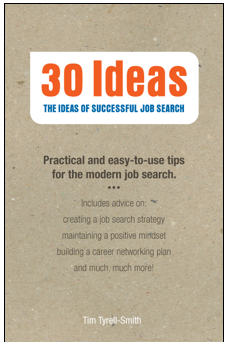
Job seekers don’t have to look very far to find advice. Book stores and the Internet are filled with ideas about strategies, tools and tips to help people find jobs. What is different about my colleague Tim Tyrell-Smith’s book, 30 Ideas: The Ideas of Successful Job Search, is his perspective as a hiring manager and a former job seeker. He was inspired to share his 30 ideas based on his own experiences.

He explains his job search focus is on “working with a purpose throughout the process…there’s little room for impulse decision-making. It is about efficiency and structure.” A bonus? His background is in consumer marketing (22 years). In case you didn’t already know — finding a job is all about marketing, branding and communicating, so Tim’s experience is invaluable.

30 Ideas offers both practical advice and important reminders.

For example, we know it’s difficult to maintain a positive mindset while job hunting. We also know how invaluable it can be to face the challenge with an optimistic attitude. Tim empathetically provides numerous suggestions to help job seekers keep an upbeat focus, including:

  • ideas to create an actionable strategy
  • reminders to embrace some of your “free” time to recharge your batteries
  • specifics to consider, even on the worst days
  • tips to overcome irrational fears
  • how to avoid the “out of work” stigma

In addition to these important reminders, Tim takes his readers through practical job search networking steps, offering advice about:

  • how to tell your network what you want
  • whom to target for networking
  • how to handle networking events
  • when to readjust your “pitch” — and how
  • what NOT to do when you network (which could be as important as what TO do)

Tim’s book is a great resource for job seekers who need a boost and some real-life, honest-to-goodness advice to remind them they can make a difference in their job hunts. Be sure to also visit Tim’s website/blog, where he offers frequent insights for job seekers — extending the advice in the book and interacting with his readers. You may also be interested in Tim’s LinkedIn group, Tim’s Strategy – Ideas For Job Search, Career And Life, where a community of job seekers and advisors share ideas and suggestions.

Learn more about 30 Ideas on Tim’s site and order it HERE via AMAZON or HERE for Kindle.

Tim generously offered to send a copy of his book to one of my readers! Comment below with a tip for job seekers based on your experience or a question!


Filed Under: Career Advice, Career Books, Drive Your Career Bus Tagged With: 30 Ideas, career coach, get a job, how to find a job, keppie careers, Miriam Salpeter, social media coach, Tim Tyrell-Smith

LinkedIn adds new functionality to ‘Company’ search

February 26, 2011 By Miriam Salpeter

LinkedIn’s blog reported yesterday that you can now search “for companies not only by attributes such as location, industry, and size but also by how you are connected. You can filter a set of results to include only those companies where you have a direct connection or broaden your search to include companies in your extended network.”

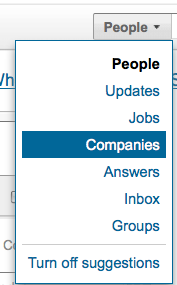
Hopefully, you have already been following companies (read more about following companies on LinkedIn here), but this is a pretty neat improvement. All you need to do is go to the top toolbar, select companies (see picture) and include keywords (which could be city, industry, etc.). LinkedIn finds a list of companies with your criteria where you have connections in your network. LinkedIn links you to those contacts and lets you know which companies currently list jobs in LinkedIn.

You’ll also have a chance to follow the company, which helps you track what is going on there. Take a look at LinkedIn’s video describing the new search function:

http://www.youtube.com/watch?v=1j5VoN_v-Us&feature=player_embedded

I think job seekers (or anyone thinking of making a change) will find this new functionality extremely useful! Be sure to keep up with The LinkedIn blog for updates.


Filed Under: Job Hunting Tools, social media Tagged With: career coach, how to find a job, how to use linkedin to find a job, keppie careers, linkedin, Miriam Salpeter, social media coach

Why you need your own website – and how to get one!

February 20, 2011 By Miriam Salpeter

Do you believe you need an online presence to help you land a job — or to help you manage your career? I spent 45 minutes last week trying to convince a career-changing friend she needed HerName.com. She is finishing an advanced degree and will be looking for opportunities in a teaching specialty. She can’t understand why it is important to have an online presence, and she made some good points:

  • I’m going to get a job because my professor recommends me to a colleague; it doesn’t have anything to do with having a website.
  • I’m not comfortable having information about me online that just anyone can find.

I tried my go-to reasons to explain why her own site was a good idea:

  • Even if your professor recommends you for the job, it’s likely the hiring manager will also Google you. What will she find?
  • A personal site is a way to control how your name appears online.
  • Statistics show your online presence matters, and that employers are looking for personal and professional data about you.
  • In fact, while you may think you have “privacy” online, NOT putting up your own site only gives people an incentive to look deeper in the web for information about you. Take a look at these sites to learn what the “deep web” knows about you: pipl.com, Polymeta.com.
  • Managing a site is important for career insurance and professional development. Showcasing your expertise online (even if it is in a new field) helps demonstrate what you have to offer, even when you aren’t looking for a job. An online presence can grow and change along with your career and help attract people to learn more about you. This could result in opportunities to speak at conferences or events, or even invitations to apply for jobs down the road.

None of this persuaded her. Finally, I came up with one last point…Something I’ve written about, but hadn’t thought to bring up during our conversation:

  • Having a website suggests you have some technical savvy and understand how to use online tools to communicate. That, in and of itself, is an important skill many employers value. It’s known as “social proof.” You may say you know about technology on your resume, but actually using it to showcase your own information goes a long way to prove you have what employers want.

Finally! She replied…”I can see how that would be important.” Noting technology in the classroom is key, and knowing how to use it could be useful, she acknowledged the “social proof” argument was more persuasive than anything else I said.

Especially if you are transitioning to a new job or an experienced job seeker who needs to overcome age discrimination, having an up-to-date online presence and maybe even a viable blog helps show prospective employers you’re willing to learn and are perfectly capable of keeping up with technology.

Maybe you, like my friend, are skeptical. You can’t envision how and why having an online presence will help you get a job, manage your career or become known as an expert in your field. Since I spend so much of my time keeping up with job search strategies and researching tools job seekers and careerists need to use, it’s so clear to me that having YourName.com is crucial to your professional identity and to managing your career.

That’s why I created a product/service to help people (even the skeptical ones) secure and manage their own websites. I’m giving it away for a steal (a colleague told me I should be charging $1000+). Think about how your investment can help you move in the right direction for your career and visit my new site to learn how to get a social resume: http://www.getasocialresume.com/.

photo by nyuudo

Filed Under: Job Hunting Tools, Resume Advice, social media, Social Networking Tagged With: career coach, get a job, how to find a job, Miriam Salpeter, social resume, why you need an online presence

  • « Go to Previous Page
  • Page 1
  • Interim pages omitted …
  • Page 20
  • Page 21
  • Page 22
  • Page 23
  • Page 24
  • Interim pages omitted …
  • Page 31
  • Go to Next Page »

Follow Us!

  • Facebook
  • Instagram
  • LinkedIn
  • Pinterest
  • Twitter

Be an Insider: Sign Up to Receive Special Offers & Free Gift


About Keppie Careers

Are you a job seeker or business owner? You’ve come to the right place!
Click here to find out more.

Contact Us

Have a question or comment?
Click here to Contact Us.
© Copyright 2024 Keppie Careers