• Skip to primary navigation
  • Skip to main content
  • Skip to footer

Keppie Careers

Social media speaker, social media consultant, job search coach

  • About
    • Expert Job Search and Social Media Consultant / Speaker
  • Services
    • For Job Seekers
    • For Entrepreneurs
    • Social Media Coaching and Consulting
    • Speaking/Keynotes
  • Resources
    • Sample Resumes
    • Quoted In
  • Books
  • Blog
  • Contact

Online tips for job seekers – On CNN

August 29, 2011 By Miriam Salpeter

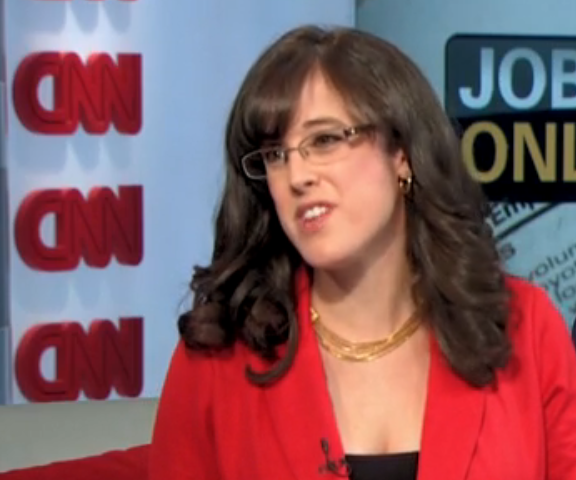
While networking is the most important part of applying for jobs, sometimes applying online is the only option. I spoke with CNN anchor, Alina Cho, to provide tips for job seekers to help them successfully apply for positions, even if they’ve been out of work for a long time. For example, is your resume targeted? Alina Cho commented, it’s not “one and done” for resumes anymore!

Watch the video for additional ideas.

Filed Under: Drive Your Career Bus, Quoted in... Tagged With: Alina Cho, CNN, how to find a job, job search author, job search expert, job search speaker, keppie careers, Miriam Salpeter

Are you looking in the right direction for your career?

August 14, 2011 By Miriam Salpeter

Last month, while walking in the magnificent Central Park in New York City, I saw a man taking a picture. As you can see in the photo I took of the man (to your right), it wasn’t that he was taking a picture that was striking, but HOW he was taking it — on his back, on the ground, pointing the lens up at the trees. His tripod (if that’s what you call it) covered his body like some sort of shield.

Clearly, there was something significant he wanted to capture. (It didn’t look particularly special to me — just leaves and the sun shining through.) Regardless, he was willing to go all out to accomplish his target photographs.

“Ah ha!” I thought. “THIS is a blog post.” Have you tried approaching your job search from a different angle? When is the last time you turned your focus a bit and thought about how you could do things differently?

Do you ever stop and think about the hiring manager’s point of view, for example? Do you ever read books or blogs written for recruiters or hiring managers? Do you know what they are thinking? What they say they like? Do you consider how your resume and other application materials may or may not appeal to them?

Maybe you’re too busy writing your resume all about you, when you really need to re-focus and write it focusing on the touch points making you qualified for the job? Are you looking backward (metaphorically) in your application materials, when it’s time to turn around and look to the future? Your resume needs to be about that future — it’s not a historical diatribe; it’s a marketing document. Focus it on your NEXT opportunity, even if it means you need to look in a different direction to do it.

Have you thought about applying for different types of jobs? Maybe “your job” doesn’t exist anymore; your field isn’t hiring. It may be time to look at your career from a different direction. Avoid being linear in your thinking; start exploring new opportunities and options. Maybe that includes working for yourself or branching out into a different field altogether. The first step is being willing to look at things from a new angle.

Are you letting people around you dictate your direction (where you’re looking)? This is often the case for young people, just starting out in their careers, but I think it is pretty common for more experienced workers, too. It’s too easy to hear the voices telling us to follow (or stay on) a certain path, when we may be happier looking elsewhere.

Are you looking at the writing on the wall, but ignoring it? Give yourself some credit. Stop and think about your plans, your goals. What are you doing to accomplish them? How can you turn your lens and re-focus your search to help you accomplish your goals?

(For more inspiration from NYC, you may enjoy “Are your perfectionist tendencies helping or hurting you?“)

Filed Under: Drive Your Career Bus, Job Stories Tagged With: career coach, career expert, how to get a job, job hunt, keppie careers, look a different direction to get a job, Miriam Salpeter

Important information about work-life fit/flexibility

June 16, 2011 By Miriam Salpeter

One issue for many job seekers is landing an opportunity offering “flexibility,” “balance,” or, what consultant,  Cali Williams Yost, CEO and Founder of Flex Strategy Group and author of Work+Life: Finding the Fit That’s Right for You, would call “work-life fit.”

Today, I’m happy to share research Cali sent me from from the 2011 Work+Life Fit™ Reality Check Survey. It illustrates that, “Work life flexibility is no longer a bright, shiny, novelty item that only a few people have.  In fact, most full-time employees have some form of work life flexibility and they are much less afraid to use it than they were five years ago.”


The following tips are directly from survey findings to help you get the most out of the work life flexibility that’s become a foundational part of the way we live and work:

Tip 1: Don’t let too much work and too little time keep you from work life flexibility, instead use that flexibility strategically to get your work done and have a life. When asked, respondents ranked “increased workload or no time for flexibility” as the top obstacle (29%) that kept them from using or improving their work life flexibility.  Looked at another way, flexibility could also be the key to managing that greater workload and having more time for the other parts of your life.  A periodic shift in hours, or working from home now and then could restore a sense of productivity and well-being.  Be creative.

Tip 2: Remember that work life flexibility comes in many forms.  It includes both day-to-day, informal ad hoc shifts in how, when and where you work, as well as formal plans that officially change your work+life fit. Even though 62% of respondents said they had some type of day-to-day, ad hoc flexibility, it’s easy to take it for granted as a given.  Use it thoughtfully and strategically to manage the way work fits into your life every day. If you are interested in more formal plan, learn ahead of time how to present a proposal that’s a win for you and the business.

Tip 3:  To make informal, day-to-day flexibility a success for you, your team and the business, make sure to communicate and coordinate with all of the key stakeholders, not just your supervisor. According to the survey, when respondents made occasional changes in how, when and where they work, they discussed those changes with:

  • 79% their supervisor
  • 63% their spouse, family or partner
  • 52% their colleagues
  • 45% those they supervise, and
  • 7% no one.

You don’t need to tell your colleagues and those you supervise why you are using flexibility, but let them know how the work will get done and how they can reach you if needed.

Tip 4: Challenge any lingering fears that may be keeping you from using or improving your work life flexibility. Make sure any fear or concern is based on fact, not invalid assumptions.  The good news is that individuals are much less likely to let fear or negative perceptions keep them from using or improving their flexibility than they were in 2006:

  • You might make less money:  21% in 2011 versus 45% in 2006
  • You might lose your job:  16% in 2011 versus 28% in 2006
  • Others will think you don’t work hard:  11% in 2011 versus 39% in 2006
  • You worry that your boss would  say “no”:  13% in 2011 versus 32% in 2006

However, obviously some fears and concerns linger.  Learn about the compensation policy related to flexibility where you aren’t working less, just differently.   Understand the employment climate in your organization.  Make sure you continue to work hard, communicate and coordinate well (see Tip 3) and learn how to present a flexibility plan that’s a win-win and hard to turn down.

Tip 5: Understand that work life flexibility is more than a perk, or benefit.  It’s a strategy that your employer can use to “retain talent, manage workload and grow.”  And without it, the business will suffer particularly in the areas of health/wellness, morale and productivity.  One of the surprising findings for the 2011 Work+Life Fit Reality Check is how many respondents either think work life flexibility is a “perk or benefit” (36%) or “don’t know” what it is (14%).  Just as work life flexibility can help you strategically manage your workload and resources, it can also benefit the business in other areas.  Specifically, a majority of respondents (66%) felt that without work life flexibility health (48%), morale (41%) and productivity (36%) would suffer.

For more details and to download the study, visit Work Life Fit Tips.

You may also want to read a study addressing the issue of inevitability of work-life flex, Findings from the Flexpaths – LinkedIn study.

photo by ellajphillips

Filed Under: Career Books, Drive Your Career Bus Tagged With: balance at work, Cali Williams Yost, career coach, career expert, how to find a job, keppie careers, Miriam Salpeter, work flexibility, work+life fit reality check survey

Why you’re not getting the job

June 1, 2011 By Miriam Salpeter

Why aren’t you getting the job?

It’s one of the most difficult and frustrating questions to face. Job seekers usually don’t receive feedback from hiring managers or interviewers, let alone hear why their resume may not have been selected for an interview. Instead, they are left to wonder if there is something wrong with them.

I don’t advise job seekers rely too much on the old stand-by reasons why they didn’t get the job: ageism (they want a 25-year old, and I’m 45), the economy is so bad/no one is getting hired (even if they are). There are no jobs in your town, and it would be impossible to sell the house right now. Your situation is unique — you took time off to care for an elderly parent, you want to return to paid work after retiring…The list goes on and on. There are plenty of “reasons” you can identify to explain away why you aren’t getting the job.

No matter what, though, in my experience, it usually comes back to several factors, and these factors are always in the job seeker’s control (unlike the items in the paragraph above, which are more difficult (although not impossible) for the job seeker to address).

– Your search itself — are you looking for a job or a company?

Even if you are getting interviews, it is possible you’re not connecting with the types of opportunities looking for someone like you. If you switch the way you are conducting your search, and instead of focusing on looking for job announcements, you look for companies with problems you know you can solve, you may have much more success.

Searching for a company instead of a job puts much more control in the job seeker’s hands. It can be very empowering to realize you can learn about an organization (via traditional and online research as well as networking) and, instead of trying to apply for a narrowly defined job, you can work on meeting people in the company and getting to know more about the organization. The goal? To be the “go to” person for the job before they even have posted a job. (Maybe before they even know they need to hire someone.)

– Your networking — and social networking

If your network isn’t working, think about making a change. Are you running around, telling everyone you know you need a job, and asking for their help? They probably have no idea how to help you. Instead, focus on letting everyone know about your expertise, take the focus off of the job. Explain what companies, industries or fields you are researching and ask if your contacts know anyone in those companies. However, try to remember not to make your job hunt the key factor when you meet with people. Think about projecting your expertise and leaving people with the impression that you are an expert in your field.

While social media won’t get you an interview, having a complete profile on LinkedIn and engaging on platforms such as Twitter can help you expand your network, which helps you improve your chances to land interviews.

– How you are applying

When you do apply for jobs, make sure your materials make it obvious that you’re well qualified and can do the job. If you are applying for a marketing job, make sure the entire resume isn’t about your sales accomplishments. You don’t want to confuse the reader — your materials should address their needs. Target your resume, online profiles, cover letter and all of your materials to their needs.

– Preparation for the interview

Prepare for an interview, even before you have one scheduled. How often will an employer expect you to be available “tomorrow” or the next day to discuss the job? Make sure you’re prepared to explain why you are qualified and why they should hire you. You’ll also need to know as much as possible about the company (which won’t be a problem if you’ve been looking for a company instead of a job!) Have stories to describe working with teams, leading, having problems with other people, overcoming difficult situations and a time when you came up against an obstacle. Be able to describe your successes and accomplishments and identify some weaknesses.

Have questions for the employer. These should be questions you cannot find answered elsewhere. It makes all the difference in an interview to sound well-prepared and interested in the job. Less prepared candidates will not make the cut in this competitive market.

– How you follow up

If you interview with six people, do you go the extra mile and send different, targeted thank you notes to each person? Or, are you emailing out the same messages, copied and pasted from one to the next? (Are you even sure you changed out the names correctly?) Making the extra effort to address each interviewer and mention what you discussed or clarify something you may have forgotten to mention can make a big difference when employers are trying to find evidence that you really are the type of candidate who will go above and beyond the call of duty.

Think about your follow up materials. How could you improve them to try to solidify your chance at the job?

Take a look at some of my other ideas on my U.S. News & World Report blog about this topic.

photo by Ciccio Pizzettaro

Filed Under: Career Advice, Drive Your Career Bus Tagged With: career coach, career expert, how to get the job, job search, job search expert, keppie careers, Miriam Salpeter, social media coach, why aren't you getting the job

Jobseekers: don’t overlook the power of your words

April 11, 2011 By Miriam Salpeter

As an avid social media user, I can be a bit cynical. It takes a lot to make me say “WOW” or to convince me to want to share a video here on my blog. (Mostly because I prefer to read things myself instead of click through to a video.) However, today, I saw a tweet from @CareerDiva, Eve Tahmincioglu. She said:

made me cry/see why RT @TheBloggess [she shared a link here – I share it below] The power of words.

(You can find The Bloggess online as well!)

Since I trust Eve, I clicked through to the video, said, “WOW” and decided to share it here so you can all think about the power of words.

Most of you come here because you’re looking for a job. But, have you thought about the power of your WORDS, and how they can help you land that job? Watch this video. I hope it makes you think — not only about the obvious things, but about how you can take control of your situation and adjust your approach to reach a different outcome. Let me know what you think. Does this video make you say, “Wow?”

photo by Calamity Meg

Filed Under: Drive Your Career Bus Tagged With: @CareerDiva, career coach, Eve Tahmincioglu, how to get a job, keppie careers, Miriam Salpeter, The Bloggess

  • « Go to Previous Page
  • Page 1
  • Interim pages omitted …
  • Page 6
  • Page 7
  • Page 8
  • Page 9
  • Page 10
  • Interim pages omitted …
  • Page 31
  • Go to Next Page »

Follow Us!

  • Facebook
  • Instagram
  • LinkedIn
  • Pinterest
  • Twitter

Be an Insider: Sign Up to Receive Special Offers & Free Gift


About Keppie Careers

Are you a job seeker or business owner? You’ve come to the right place!
Click here to find out more.

Contact Us

Have a question or comment?
Click here to Contact Us.
© Copyright 2024 Keppie Careers