• Skip to primary navigation
  • Skip to main content
  • Skip to footer

Keppie Careers

Social media speaker, social media consultant, job search coach

  • About
    • Expert Job Search and Social Media Consultant / Speaker
  • Services
    • For Job Seekers
    • For Entrepreneurs
    • Social Media Coaching and Consulting
    • Speaking/Keynotes
  • Resources
    • Sample Resumes
    • Quoted In
  • Books
  • Blog
  • Contact

Are flexible work environments inevitable?

January 31, 2011 By Miriam Salpeter

Can you imagine being asked to select your work style at the same time as you choose your benefits package when starting a new job? Neither can I! However, a new study, Flexible Work: Perceptions & Realities — Findings from the Flexpaths – LinkedIn Virtual Think Tanks December 2010, suggests this seemingly impossible scenario may become a reality. (Take a look at the entire whitepaper, embedded at the end of this post.)

The study was significant because, of the 45 participants in the research groups, 24 were managing directors or CEOs (mostly from companies with 200-700 employees) and 16 were senior Human Resources leaders (mostly from companies with over 1,000 employees).

It’s not surprising to learn that a commonality between all of the companies represented was an array of  cultural obstacles to embracing a truly flexible workplace. Even defining “flexible work” was a challenge. Participants suggested several approaches, including:

  • Flexibility Around “When” – working non-traditional hours and compressed workweeks
  • Flexibility Around “Where” – involving telecommuting/telework
  • Flexibility Around “How Much” – inviting workers to share job hours, reducing hours in exchange for less pay, sabbaticals, etc.
  • Flexibility Around “How” – incorporating freelance and contract workers

Few of the think tank participants had formal policies to govern flexible work, but a main impetus for making flexibility a part of their plans was “attracting and retaining top talent.” The study notes, “Several (participants) remarked upon how saving even a couple of high performers from leaving had more than paid for their flexible work initiatives.”
Additionally, several CEOs noted they want to attract the best Generation Y talent, which is driving their interest in a flexible workplace. Some saw a shift in their approach to flexibility as being customer service focused and others acknowledged that having flexibility helped engage workers.

A majority of participants expect flexible work arrangements to be an important factor to remaining competitive, suggesting “significant increases in the proportion of their workforces that would be engaging in flexible work” by 2015. Some thought it would be as high as 80% of their workforce, but most predicted around 50% of their employees may take advantage of flexible work options by that time. (Compared to 25% currently.)

No doubt, significant changes will be necessary to achieve those percentages, as participants recognized that flexible work appeals to a lot of workers, but  “employees are afraid that requesting flexible work will jeopardize their career opportunities.”

Barriers to a truly flexible workplace mentioned in the study include:
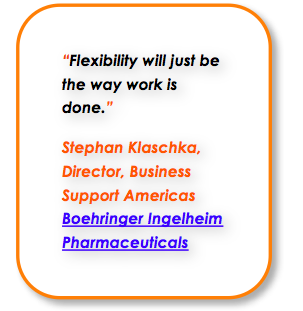
  • Fear of lost control and lack of trust (on the employer’s part)
  • Losing a team spirit (if people don’t work face-to-face)
  • Legal issues
  • Measuring success and rewarding results – how to manage flexible workers without sacrificing quality

(The entire whitepaper is available at the end of this post for your review.)

If a flexible work arrangement appeals to you, here are some tips from Cali Williams Yost, author of Work+Life: Finding the Fit That’s Right for You (Riverhead, Penguin Group, 2005):

Three Fool-Proof Tips for Making Flexible Work a Success

Tip 1: Don’t expect your manager to come up with a solution. Start the conversation with him or her by presenting a clear flexibility plan that specifies the:

  • Type of flexibility you are proposing
  • How the work will get done (not “why” you want flexibility—it doesn’t matter)
  • How the business will benefit from your plan, and
  • When the plan will be reviewing (e.g. initially 90 days; annually thereafter)

(Step-by-step guide to create a win-win flexibility plan guaranteed to get a fair hearing: “Work+Life: Finding the Fit That’s Right for You” by Cali Williams Yost.)

Tip 2: Remember that it’s your job to (over) communicate with your boss, your team and your clients.

When you are out-of-sight because either you work from home or work flexible, non-traditional hours, be mindful of consistent accessibility and reliability:

  • If you aren’t immediately reachable, make it a priority to check messages regularly and respond in a timely manner.
  • Initiate a “check in” by email, IM or phone once or twice during the day with your team or your manager to see if there is anything you need to be aware of. Most likely there won’t be, but they will appreciate the extra effort.
  • Each week, put together one-page of highlights of accomplishments. In today’s economy, we should all have a record of what we’ve done…not just flex workers! It comes in handy when negotiating for a raise or promotion.

Tip 3: Be flexible with your flexibility.

Nothing causes a manager or a coworker to lose patience with your flexibility faster than a consistent unwillingness to periodically “go the extra mile.” If there’s an unexpected deadline and it’s your time to leave, offer to stay now and then. If you’re scheduled to work from home, offer to come into the office if it’s the only day a client can meet.

Taking the initiative, being conscientious and going the extra mile (from time to time), are small actions that go a long way to making your flexibility work for everyone.

ABOUT FLEXPATHS LLC

FlexPaths® is a leading global provider of web-based software solutions and advisory services that help companies create and leverage a flexible working culture. You can find them on Twitter, Facebook and LinkedIn.

ABOUT CALI WILLIAMS YOST

Cali is the CEO of the Flex+Strategy Group / Work+Life Fit, Inc., a flexibility strategy consulting firm. In addition to her book, Work+Life: Finding the Fit That’s Right for You (Riverhead/Penguin Group, 2005), Yost created the award-winning Work+Life Fit blog, and is an expert blogger for FastCompany.com. You can follow her on Twitter @caliyost.

Flexpaths & LinkedIn Present Think Tank Findings, Flexible Work: Perceptions & Realities

View more documents from FlexPaths.

Filed Under: Career Advice, Career/Life Balance Tagged With: Cali Williams Yost, Cali Yost, flexible work, Flexpaths, Flexpaths-LinkedIn Virtual Think Tanks, how to achieve work-life fit, how to get a flexible job, how to make flexible work a success, how to successfully work flexible hours, keppie careers, Miriam Salpeter

How to use LinkedIn’s tools to get a promotion

January 26, 2011 By Miriam Salpeter

One great feature of LinkedIn is that you can follow companies and keep on top of when people update their profiles indicating they changed jobs.

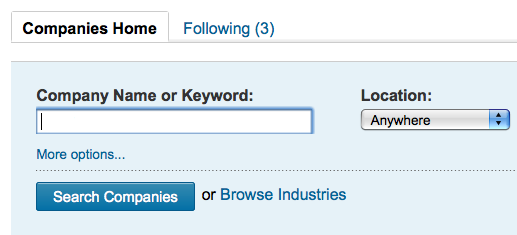
Just follow the Companies tab from LinkedIn’s top toolbar (see below):

Then, select a company of interest (you may choose a location a certain distance away from where you live or want to live):

Search companies or browse industries, and LinkedIn will show if you have anyone in your network working in those organizations. When you follow companies, you’ll receive regular updates when someone working for that company updates his or her profile indicating a change in position — maybe suggesting an opening to pursue via your network!

In fact, LinkedIn just released information suggesting the best months (statistically, per their network) to get a promotion. Their press release noted a Buck Consultants survey, “Compensation Planning for 2011,”saying workers in the U.S. can expect only modest pay raises this year, although salary increases for 2011 will average 2.8 percent, an increase from the two previous years.

According to LinkedIn’s data, the top three months for professionals in the U.S. to get promoted within their company are:

  1. January
  2. June
  3. July

Interestingly, their data show professionals in accounting, defense & space, education management, higher education, military, non-profit organization management and research tend to see a spike in promotions over the summer months more than other industries.

The data indicate a generational link to the timing of promotions. Their study notes that Millennials (born in the 1980s) “are the most likely to be promoted throughout the year (rather than just in January which is the case for most professionals).”

Job seekers (and anyone driving their own “career bus” should take advantage of LinkedIn’s tools. The amount of data they access regarding professional trends and the services they provide are extremely useful beyond simply sharing a profile. DJ Patil, LinkedIn’s chief scientist explains,

“LinkedIn was launched in 2003, but our data allow us to identify professional trends that span decades…By shedding light on professional patterns, we hope to help our members achieve their career goals by using LinkedIn in the most effective and productive way possible.”

“One of the best ways to get promoted is by promoting yourself,” said Lindsey Pollak, a career and workplace expert. “LinkedIn is the perfect place for professionals to get clients, vendors and other third parties to post recommendations on their profile. By encouraging other professionals to champion the work you do in your current role, you’ll be more likely to advance to the next level.”

Take a look at how LinkedIn suggests you leverage their social network to land a promotion:

Shine the Spotlight on New Skills

Impress your manager by learning new skills that go above and beyond your current role. Make sure your LinkedIn Profile is complete and includes all the skills you’ve acquired. Expanding your horizons while working full time is a commendable endeavor that’s worth calling attention to. If your company offers an education reimbursement program, take advantage of it. If you have industry certifications or went back to school for a higher degree, mention them in your profile and during your review.

Get Connections in High Places

LinkedIn Advanced People Search lets you search by title so you can find professionals that have the position you want to be promoted to. Reaching out to mentors and peers is one way to prep for that 2011 promotion. After the promotion, a strong relationship with a peer will give you a friendly ear you can rely on for advice if things get tough.

Toot Your Horn

Remind your manager of your accomplishments. Even if they were monumental, he or she may have forgotten about them. Document milestones in your career by requesting quality recommendations on LinkedIn. If a customer sends you an email thanking you for the amazing event you put together for them in record time, gently suggest that they provide you with a recommendation (if they feel comfortable doing so) and also forward the email to your manager so they’re aware of the praise you’re receiving.

photo by nan palmero

Filed Under: Career Advice, Social Networking Tagged With: career coach, how to get a job, how to use linkedin, keppie careers, Lindsey Pollak, linkedin, Miriam Salpeter, when to get a promotion

2 Reasons you should not be looking for a job

January 12, 2011 By Miriam Salpeter

It may be unexpected advice from a job search coach, but ideally you should not be looking for a job. Here’s why you need to get off those job boards and readjust your approach:

1. Instead of searching for a job, find a problem you can solve.

This is a proactive approach, and forces you to network and interact with a variety of people and to research problems facing organizations requiring your expertise. Identify thought leaders in your field and begin to insert yourself in their conversations. (One good tip is to discover and read blogs targeting your industry. Check Alltop.com for a great list or use Google’s blog search.)

Trying to find a problem to solve instead of a job requires you to consciously identify skills you plan to use in your next opportunity and to outline your accomplishments. If you stop searching for a job and start paying attention to what you have to offer, you will recognize you control more than you may have realized when it comes to your search.

Read the rest on my NEW, weekly blog on U.S. News & World Report’s Careers site…

Don’t Look for a Job – Make the Job Come to You


Photo by Jeffrey Beall

Filed Under: Career Advice Tagged With: career coach, don't look for a job, how to find a job, keppie careers, Miriam Salpeter, resume writing, U.S. News & World Report

How to find people on LinkedIn?

January 10, 2011 By Miriam Salpeter

I wrote about LinkedIn this week and about how to subscribe to RSS feeds for the Answers section. Before I published the post, my friend Hannah Morgan, AKA @careersherpa, contacted me to ask if I’d  contribute a suggestion to help readers find great people to connect with on LinkedIn.

There are so many great ways, but since I had LinkedIn’s Answers on the brain, I replied:

Using LinkedIn’s Answers is one way to expand  potential connections. Often, when I ask a question, people who answer it will request to connect, or if I answer a question, people who asked it may request that we “link in.” If you are asking and answering questions related to your field, you may “meet” people who could be great networking contacts you wouldn’t otherwise know.

A lot of our colleagues offered great ideas to help you find people via LinkedIn on Hannah’s blog. Be sure to visit CareerSherpa.com for all the suggestions!

photo by 99zeros

Filed Under: Career Advice, Social Networking Tagged With: career networking, Career Sherpa, Hannah Morgan, how to find a job, how to find people on Linkedin, how to grow your professional network, keppie careers, linkedin, Miriam Salpeter, professional networking

Job seekers and entrepreneurs: subscribe to LinkedIn’s Answers

January 9, 2011 By Miriam Salpeter

Whether you are currently looking for a job (or just thinking about beginning a job hunt) or if you are promoting your own business, it is important to do what you can to stand out of a crowd of people. U.S. News & World Report says there are statistically five unemployed people for every job, compared to an average of 1.7 people for every job in the three years before the recession.

One way to help you demonstrate your expertise is to share your thoughts via LinkedIn’s Answers section.

If you are not familiar, LinkedIn’s Answers offers a venue for people to ask and reply to questions about all different topics. The questions run the gamut; some seem silly, but others are quite serious. A quick review shows the following as current questions:

  • Is it time for the Cinema industry to rethink its business plan?
  • How will the recent tax bill effect solar and renewable energy finance?
  • Pick a letter in the alphabet and write a sentence using letters in the alphabet in order… Example: “A big cat does everything”…
  • Looking for virtual purchasing guest lecturers in GA 400 Corridor.

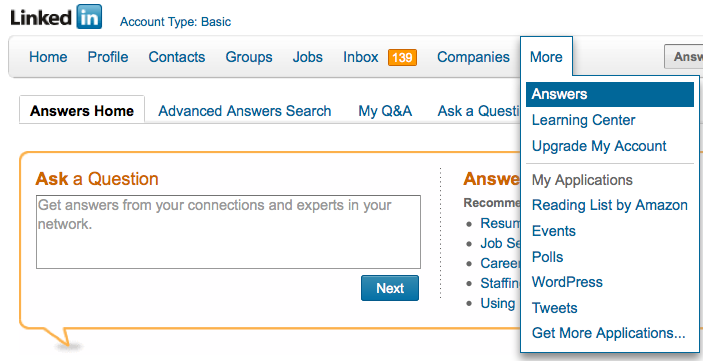
To find questions to answer, follow the MORE tab along LinkedIn’s top toolbar. Select Answers. (See the figure below.) To search based on topics (For example: Administration, Business Operations, Business Travel, Career and Education, Conferences and Event Planning, etc.), select Advanced Answers Search (right next to the Answers Home tab). Select the topics of interest and click on SEARCH.

Read through the questions, choose the ones you are interested in answering and reply in the form provided. LinkedIn allows you to suggest other LinkedIn contacts to answer the question and offers the opportunity to share a link in reply to a question. If you have a blog, you may consider replying via your blog and sharing the link. Or, you may already have a post that provides a good answer; share that link.) You can even reply privately to the questioner if you do not want your answer to be public.

Answering questions and demonstrating your expertise will help alert others in your industry and those interested in your work (whether you are a job seeker or entrepreneur) that you are willing and able to serve as an expert. In fact, I connected with my very first online client after answering some career oriented questions and hired my first web developer after he answered my question

One way to keep track of questions you might want to answer is to subscribe to the RSS feed of a topic of interest. If you are not familiar, RSS stands for really simple syndication. It is a way to receive information either via a “reader” or in your email, so you don’t need to personally visit every website or blog you enjoy to see if there is new information (or a new question). Common Craft has a great video to describe RSS.

(If you don’t use a feed reader already, maybe it is time! I use iGoogle, which you can use by signing up via your Google account. The video points out how to get started.)

Here’s how to subscribe to LinkedIn’s Answers:

From LinkedIn’s top toolbar, select MORE, then select ANSWERS.

Scroll down…

On the right side of the screen, you will see a column called BROWSE.

Select any topic from the list. (For example, “LAW AND LEGAL”).

Once you selected it, scroll down again.

At the bottom of the column, it will now have a little orange RSS symbol (shown to the right) and it should say:

Subscribe to new question in:

Law and Legal

Click on it.

Select the feed reader you use, for example, I use GOOGLE.

Choose to add to your reader or your homepage.

You’re done!

Subscribe to as many as you’d like, or  just plan some time every week to review questions in LinkedIn.

Stay tuned for more ways to demonstrate your expertise and stand a head above the rest!

Filed Under: Career Advice, Networking, Social Networking Tagged With: how to find a job, how to market your expertise, how to subscribe to LinkedIn's answers section, job search, keppie careers, linkedin, LinkedIn for job search, Miriam Salpeter, Personal Branding, small business owners

  • « Go to Previous Page
  • Page 1
  • Interim pages omitted …
  • Page 58
  • Page 59
  • Page 60
  • Page 61
  • Page 62
  • Interim pages omitted …
  • Page 129
  • Go to Next Page »

Follow Us!

  • Facebook
  • Instagram
  • LinkedIn
  • Pinterest
  • Twitter

Be an Insider: Sign Up to Receive Special Offers & Free Gift


About Keppie Careers

Are you a job seeker or business owner? You’ve come to the right place!
Click here to find out more.

Contact Us

Have a question or comment?
Click here to Contact Us.
© Copyright 2024 Keppie Careers