
• Skip to primary navigation
  • Skip to main content
  • Skip to footer

Keppie Careers

Social media speaker, social media consultant, job search coach

  • About
    • Expert Job Search and Social Media Consultant / Speaker
  • Services
    • For Job Seekers
    • For Entrepreneurs
    • Social Media Coaching and Consulting
    • Speaking/Keynotes
  • Resources
    • Sample Resumes
    • Quoted In
  • Books
  • Blog
  • Contact

How to grow your job search network

January 26, 2016 By Miriam Salpeter

networkDon’t rest on your networking laurels if you’re in the market for a job — of if you are thinking of starting or growing a business. Once you identify your network, you’ll want to get to work expanding it. You never know who “knows someone who knows someone.” Everyone you meet and impress with your skills and savvy is a potential link to your next great opportunity.

Incorporate these plans into your networking:

Learn how to introduce yourself. This is more important than you may think, and you’ll want to spend time planning out your pitch so it will interest other people, not bore them to tears. (In other words, don’t plan out a two-minute elevator story. It is unlikely to amaze and impress your new contacts.)

Do not go around telling everyone you are looking for a job. No matter what your friends told you, if you focus on your status as a job seeker, people may lose interest in your story from the start.

Get my free white paper: 5 Mistakes Preventing You From Landing a Job This Week 

Be generous with your expertise and identify ways to help your network. What problems do they have that you can help solve?

Listen carefully. Don’t talk so much when you network. People appreciate a good listener. Let that be you.

Find new places to network. You can meet a new contact while in line at the post office, but it may be worth your time to target professional groups where your target audience is likely to gather.

Track your contacts. Use all the tools at your disposal so you don’t waste any opportunities. If you meet someone and never follow up, that’s a lost opportunity.

Click through for details about these topics, including specifics about how to create a great pitch, how to keep the proverbial doors open when you’re networking, details about ways to be helpful for your network, techniques to be a better listener and suggestions about how to track your contacts.

Read the entire article on Vault.com.

Filed Under: Networking Tagged With: how to get a job, how to network, keppie careers, Miriam Salpeter, Vault.com

Networking tips you need to know

January 20, 2016 By Miriam Salpeter

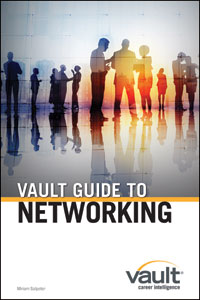
Vault GuideDo you think of networking as a dirty word? Is it something you want to avoid at all costs? You are not alone. However, if you’re a hesitant networker, there’s good news for you! With a little preparation, the right expectations and a strategic plan, networking is probably a lot easier than you think.

If you’d like a guide to help you through every step of your networking journey, I authored one for Vault.com, and it’s available now. Vault is known for its influential rankings, ratings and reviews of thousands of employers and hundreds of internship programs. Vault.com also shares information about what it’s really like to work in an industry, company or profession—and how to position yourself to launch and build the career you want. You can find the Vault Guide to Networking available online.

In the meantime, click through to learn:

  • Compelling statistics to prove networking deserves your attention.
  • What is networking — and what it is not.
  • Networking myths.
  • How to network for success (including some tips to help you become a networking sleuth).
  • How to look beyond the obvious.
  • Understand what you offer.
  • Why networking isn’t about asking for a job.
  • How to time your networking to your best advantage.
  • Why it’s important to be a good listener.
  • Why it’s important to be persistent.

Get my free white paper: 5 Mistakes Preventing You From Landing a Job This Week 

Read the entire article on Vault.com.

Filed Under: Career Advice, Networking Tagged With: how to get a job, how to network to get a job, Miriam Salpeter, networking for job search, Vault.com

Why you should have a personal website

November 29, 2015 By Miriam Salpeter

http://www.dreamstime.com/royalty-free-stock-photo-people-social-networking-computer-network-concepts-image41603635How can you stand out in a competitive market? Whether you want to look for a job or you’re planning to start your own business, making a good first impression is key. People will turn to Google and online tools to help them form first impressions of you. When you apply for positions or vie for opportunities, it’s likely someone will check you out online before considering to invite you to an interview.

That can be good or bad news, depending on what that person finds! The good news is you can influence what people find when they search for you online. One way is to create a stream of professional content via social media tools, such as LinkedIn, Twitter, Facebook and Google Plus. Using these tools is free, does not require a lot of technical skill and, once you understand social media basics, makes it easy to showcase your information.

Get my free white paper: 5 Mistakes Preventing You From Landing a Job This Week 

One additional strategy many job seekers overlook is building and maintaining a personal website, also known as a “social résumé.” Domain.ME – provider of the “.me” domain extension –  conducted a survey of 600 professionals who own their own websites. Eighty-four percent of respondents reported receiving tangible career benefits from their personal website.

A  Forbes article, when referencing Workfolio, noted that “56 percent of all hiring managers are more impressed by a candidate’s personal website than any other personal branding tool – however, only 7 percent of job seekers actually have a personal website.”

How can having your own website help your career? Predrag Lesic, CEO of Domain.ME, offers these insights:

1. It helps you clarify your brand. Can you think of a brand you respect that does not have a website? Would you hire a service provider who didn’t have a strong online presence?

“Today, a web presence is a measure of credibility and a powerful tool for communicating what you are all about to your target audiences,” Lesic says. “While it may seem unusual to consider yourself a commodity, as a job seeker, you are marketing yourself to meet a need. Like every good brand, your personal brand should live online.”

2. It gets you noticed. In the Domain.Me survey, 70 percent reported believing that employers review their online presence prior to an interview. In fact, a 2014 Jobvite survey of human resources professionals reveals that 93 percent of recruiters will review a candidate’s social media profile before making a decision, and that candidate information found on the Web influences their hiring decisions.

“As employers increasingly turn to the Internet to identify and research potential candidates, you want to be searchable. Your Facebook page may entertain family members and friends, but it isn’t designed to highlight your strengths as a job candidate. Conversely, your LinkedIn profile, while providing professional credentials, can be dry and impersonal,” Lesic says. “Not only is your website a fully customizable platform to showcase your personal brand, the savvy you demonstrate in owning your Web real estate and building a site can impress potential employers.”

Creating this online real estate is not difficult, and there are various ways to accomplish it. One way is via “hosted” sites, such as About.me or Flavors.me, which allow you to design your own landing page on their directories. These options result in an online presence, but the URL will not be in your name only.

If you want to own a memorable, personalized domain, you can purchase an address using any of the major domain registrars. Lesic explains: “With .com availability dwindling, a popular choice for personal websites is the .ME extension.”

Once you own a domain of your choice – ideally, “YourName.com” or YourName.me – you can turn to various tools to populate and publish the site, such as WordPress, Wix, Squarespace or Jigsy.

3. It’s more than a résumé. In Domain.ME’s survey, respondents were asked which is more important for long-term career success: a personal website or a résumé. The majority (63 percent) favored websites. “A website is interactive, evolving and dynamic,” Lesic says. “Your portfolio, writing samples, testimonials, images and more add color to your professional history. And your site’s design aesthetic and tone of voice help to convey your personal brand.”

4. It networks for you. While in-person networking isn’t going out of style, digital networking can help make the job a lot easier. More than half of survey respondents believe their personal sites help them achieve professional recognition, connect them with a network of like-minded professionals and attract new customers.

“Your website never sleeps or takes a day off,” Lesic says. “It makes you accessible to an enormous audience and invites people to engage with your content and to contact you.”

Originally appeared on U.S. News & World Report.

Filed Under: Career Advice, social media, Social Networking Tagged With: get a social resume, how to get a job, keppie careers, Miriam Salpeter, why have a website

Best gifts for job seekers

November 24, 2015 By Miriam Salpeter

giftIs someone on your holiday gift list looking for a job? Whether your friend or family member is a new college graduate, an unhappy careerist who covets a new job or an unemployed baby boomer, there are many great gifts that will be perfect for someone who is wishing for a new position in the new year. What are the best gifts for job seekers?

Start with these ideas and share your own in the comments.

A gift certificate for a job search coach and/or a résumé makeover. Many people remain unemployed or have a tough time finding something new because they don’t understand how to create appropriate job search materials. Looking for a job is a skill most people don’t use very often, so the majority of the population isn’t particularly good at it. Coaches who stay in the know about the job market understand how to create marketing materials that appeal to employers. If you know someone who has been looking for a long time, it’s very likely he or she has a poor résumé or isn’t focusing on the correct path to a new job. A coach can help.

Tools of the trade. Does your job seeker have the technology needed to land a job faster? A computer loaded with software needed to create résumés to send to employers is a key tool. A smartphone or tablet can also be helpful.

Bag or portfolio. It’s always nice to have a well-appointed bag to carry a computer and other materials needed when you’re out for a day of networking or interviewing. Something professional can help provide an extra boost of confidence. Look for special touches, such as pockets for key items like business cards so they don’t get lost at the bottom of the bag. A nice portfolio to carry to meetings can also be a great gift.

Watch. Even though it’s easy to see the time on a smartphone, a fashionable watch can be a great accessory and useful for the job seeker. Let’s face it – it’s awkward to pick up your phone in the middle of an informational interview to check the time; a quick, surreptitious glance at a watch is not obtrusive or distracting.

Get my free white paper: 5 Mistakes Preventing You From Landing a Job This Week 

Coffee shop gift cards. It’s nice to get out of the house, and coffee shops are locales of choice for many job seekers who want to be out and about while checking online for the latest opportunities. A gift card to cover at least a few lattes is likely to be welcomed.

A new look. Clothing or a visit to a salon for a makeover can be helpful for the cash-strapped job seeker, or for someone who hasn’t had a haircut in two years. We don’t like to admit that people judge us based on how we look, but there’s no question an updated look, including stylish clothing, polished shoes and a modern haircut can help the skilled job seeker get to the next step.

New skills. Most people can benefit from a class that helps them learn new skills. Whether you gift a job-related course or select a fun opportunity to explore or continue a hobby – either an online class or an in-person learning opportunity that may double as a chance to network – a gift of new skills is a great choice for job seekers.

A night out. If your gift is for someone who has been out of work or saving money for some time, an enjoyable evening out is especially welcome. A gift card for a favorite restaurant, movie passes, concert tickets or something along those lines can be a great gift.

Give a gift that keeps on giving. If you have even a small part in helping someone find a new job, they’ll always remember it.
Also appeared on U.S. News & World Reports.

Filed Under: Career/Life Balance Tagged With: best gifts for job seekers, how to get a job, keppie careers, Miriam Salpeter

How veterans can find civilian jobs

November 11, 2015 By Miriam Salpeter

file0002076316124

Making a career change isn’t easy, and it’s especially challenging when you’re transitioning from a military to a civilian environment. You need to showcase why you are qualified for the targeted job, even if your past experiences do not identically match the employer’s requirements. Adding to the complexity, most employers are not familiar with military service, positions, jargon or acronyms, so it can be even more challenging for veterans to make a strong case. However,  job-seeking veterans can take steps to help make the transition into civilian positions as smooth as possible.

Identify your skills. Evaluate your military service. What did you do on a daily basis? Make a list. Once your list is complete, pair skills you used with each task. Pay special attention to your transferable skills—the ones you can easily use in different organizations.

For example, if you were an infantryman and your main responsibilities were related to combat missions that do not easily correlate with civilian jobs, you’ll want to dig deeper into your skills. Don’t just think about what you did—ask yourself how and why you were successful. You could highlight your abilities to quickly assess and respond to a situation, focus on how you thrived in an exceptionally stressful environment, and point out that you worked well with a team while demonstrating leadership. You’ll want to look for jobs requiring the skills you identify.

Note your accomplishments. Do not underestimate the value of awards and accolades you received, but do translate them into terms non-military personnel will understand. Note the award name with a brief description of why you received it. If you do not have specific honors, think about praise you may have received from a superior or member of your platoon. Did an officer comment about how you are always planning ahead or mention a specific detail you can share with your targeted employer? This information will be helpful in determining your next career steps.

Get my free white paper: 5 Mistakes Preventing You From Landing a Job This Week 

Focus on what you enjoy doing. Don’t ignore your “soft skills,” or emotional intelligence. For example, are you a good communicator? Do you have a knack for leading teams? Maybe you’re a great negotiator. Identify your best skills and include these on your list.

Research potential opportunities. Once you have your lists, plug your skills (your keywords) into job-board search engines to see what types of positions come up. For example, you may search for “supervise,” “oversee projects,” or “leadership.”  Keep an open mind and see if there is any pattern or type of job that keeps coming up.

Make a list of job titles and company names. Was there a particular industry that appeared repeatedly in your results? Continue to search online for more information about those fields or organizations.

Inform your network. Once you know what you want to do, be specific when you describe your goals to your network. Don’t just say you are looking for “a job.” It’s tough for people to help you without detailed information and a focal point. Tell your friends and contacts the names of companies and positions that interest you. Be specific. For example, “I’m hoping to find a sales position in a high-tech field. Do you know anyone working in X, Y, or Z company who might be willing to meet me so I can learn more about their organizations—even if they aren’t currently hiring?” Follow up by asking for an informational meeting.

Translate your experience. A common problem for job-seeking veterans is helping civilian, non-military hiring managers understand their work history. Be sure to avoid military jargon in application materials and describe your past experience in layperson’s terms. Ask a non-veteran friend to read your resume and application. Can he or she describe what you used to do? If not, revise your materials and be sure to focus on the skills you used, not just the things you did. Consider using this template to write some of your resume’s bullet points:

Used _____, ________, and _______ skills by (doing what?), resulting in (list an accomplishment).

Always try to make the information you list as relevant as possible to the employers you identified.

Be sure to include specific, quantifiable points in your descriptions. For example, do not assume the reader will know how many troops you led based on your rank and title. Whenever possible, incorporate percentages, dollar amounts, and numbers in your resume. Paint a vivid, relevant picture to help the hiring manager envision you doing the job.

Tell your story. In an interview, be sure to describe your experiences in a way that a layperson will understand. Avoid military jargon and acronyms, and give examples relevant to the job you want. Have three or four stories in mind to illustrate your accomplishments and describe how you overcame challenges and solved problems.

Following these steps from the exploratory through the interview stages of job hunting will help you identify and compete for suitable opportunities. For many more insights and suggestions about job search, please review my other blog posts.

Filed Under: Career Advice Tagged With: civilian jobs, how to get a job, keppie careers, military to civilian jobs, Miriam Salpeter, Veteran's Day

  • « Go to Previous Page
  • Page 1
  • Page 2
  • Page 3
  • Page 4
  • Interim pages omitted …
  • Page 35
  • Go to Next Page »

Follow Us!

  • Facebook
  • Instagram
  • LinkedIn
  • Pinterest
  • Twitter

Be an Insider: Sign Up to Receive Special Offers & Free Gift


About Keppie Careers

Are you a job seeker or business owner? You’ve come to the right place!
Click here to find out more.

Contact Us

Have a question or comment?
Click here to Contact Us.
© Copyright 2024 Keppie Careers